


Views: 0 Author: Site Editor Publish Time: 2026-09-30 Origin: Site


Selecting a high-capacity circulation system represents a high-stakes capital expenditure for any drilling operation. Misjudging these specific ratings leads directly to wasted capital on over-engineered equipment. Conversely, it can trigger catastrophic downtime from under-specified limits during critical operations. Operators often face severe challenges when field realities drastically mismatch initial laboratory metrics.
Beyond basic sticker specifications, actual operational capability depends heavily on complex fluid dynamics. Well depth and specific continuous versus intermittent duty cycles also play massive roles in dictating performance. Relying purely on peak pressure claims creates dangerous vulnerabilities on the rig floor.
This guide breaks down how to critically evaluate equipment ratings. It details how to match them directly to your operational realities. We help you navigate complex trade-offs between pressure output, volume delivery, and ongoing maintenance demands. You will learn actionable frameworks to specify equipment accurately and integrate systems seamlessly into your existing infrastructure.
Maximum pressure ratings are inversely proportional to flow rates; liner size is the deciding variable.
Matching a triplex mud pump to specific well depths requires calculating exact bottom-hole pressure requirements and drilling fluid density.
Evaluating a pump based solely on peak horsepower (HP) ignores the Total Cost of Ownership (TCO) tied to fluid end wear and aftermarket parts availability.
Robust selection frameworks must account for existing drilling rig integration and API compliance.
Successful deployments demand rigorous equipment evaluation from the start. You must balance sufficient annular velocity for effective hole cleaning against physical limitations. This requirement constantly pushes against the absolute stress boundaries of your fluid end modules. We define operational success as maintaining optimal flow rates without mechanically overloading critical pump components.
Operators frequently miscalculate these operational boundaries. The compounding cost of equipment misalignment creates severe ripple effects across entire drilling campaigns.
Under-sizing: This triggers inadequate hole cleaning and severe stuck pipe risks downhole. It also accelerates component wear heavily. Expendables fail much faster when systems run continuously at their maximum rated capacity.
Over-sizing: This artificially inflates initial capital expenditures. It adds unnecessary physical footprint and deck weight. The extra bulk rarely delivers proportional operational value to justify the added logistics.
Evidence dictates a grounded reality check during the procurement phase. Peak laboratory metrics rarely reflect brutal field conditions. You should focus entirely on sustained continuous duty parameters. Always evaluate these limits under your actual expected fluid weights and operating temperatures. Incorporating a reliable Drilling fluid pump requires understanding its behavior under genuine operational stress.
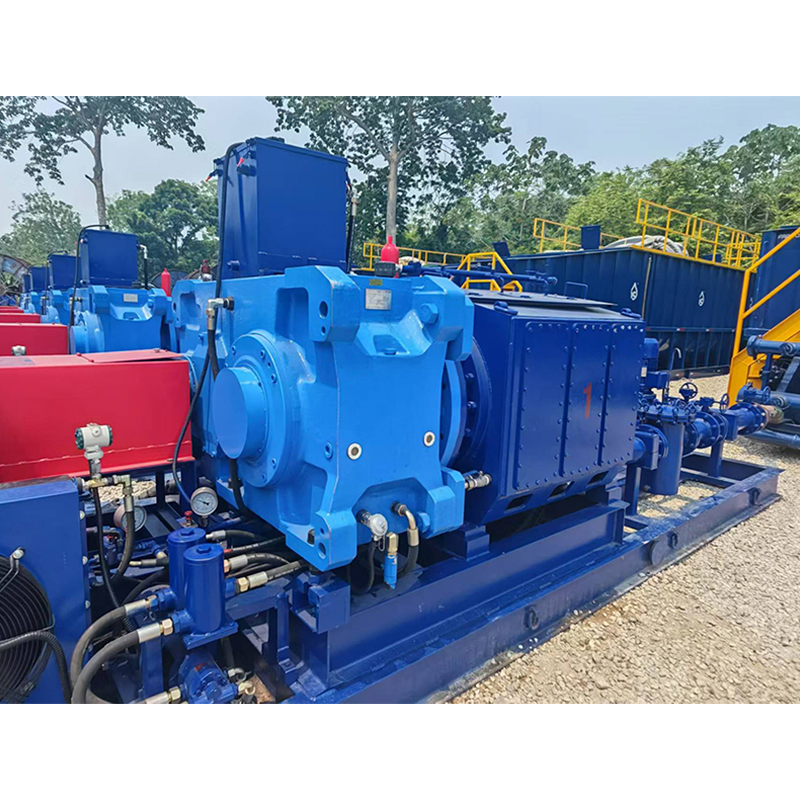
Understanding the core mechanical trade-offs prevents costly specification errors. The relationship between pressure output and volume remains strictly inverse. You cannot bypass this fundamental law of hydraulics.
For any given input horsepower, increasing discharge pressure requires decreasing the liner size. This physical change proportionally drops your maximum flow rate, measured in gallons per minute (GPM). You cannot simultaneously maximize both metrics on a fixed-power mechanical system. Attempting to push both boundaries simultaneously leads to immediate engine stalling or catastrophic gear failure.
Different liner diameters dictate safe working limits. Smaller liners handle extreme pressures safely. Larger liners move massive volumes but operate safely only at much lower maximum pressures. Metallurgical integrity matters immensely in these high-stress zones. Abrasive high-pressure applications demand premium alloys to prevent premature scoring and catastrophic metal fatigue.
We must also distinguish clearly between input horsepower and hydraulic horsepower. Input power represents the raw mechanical force driving your equipment. Hydraulic power measures the actual kinetic energy delivered into the fluid column. You should always assume a standard mechanical efficiency loss during operation. These mechanical drivetrain losses typically consume 10 to 15 percent of total rated power. When selecting a High pressure mud pump, base your calculations entirely on hydraulic output.
Liner Size versus Operating Characteristics Reference
Liner Diameter (Inches) | Relative Flow Volume | Maximum Pressure Rating | Primary Field Application |
|---|---|---|---|
4.5 to 5.0 | Low (GPM) | Extremely High (PSI) | Deep well completions and horizontal fracturing |
5.5 to 6.0 | Medium (GPM) | High (PSI) | Standard intermediate depth drilling |
6.5 to 7.0 | High (GPM) | Moderate (PSI) | Shallow depths requiring rapid cuttings removal |
Industry professionals universally favor three-cylinder designs for highly demanding modern applications. We consider the Triplex mud pump the undisputed global industry standard. It delivers significantly smoother discharge flow than legacy dual-cylinder models. This specific design drastically reduces destructive pressure pulsations across the entire surface network. Smooth fluid delivery proves absolutely critical for extending downhole measurement tool lifespans.
Mapping your equipment specifications to specific well depths ensures operational stability. You must tailor the hydraulic setup to the unique geological profile.
Shallow to Medium Wells: These environments present lower hydrostatic demands. Operations require high volume output for rapid hole progression. You should install larger liners to maximize gallons per minute and clear cuttings efficiently.
Deep and Extended Reach Wells: These complex directional profiles demand immense energy. You need significant force to overcome massive hydrostatic friction. High pressure capabilities become mandatory to power advanced downhole mud motors effectively.
Integration extends far beyond pure hydraulic performance metrics. You must evaluate physical rig compatibility thoroughly before purchase. Assess the equipment footprint and strict deck weight restrictions carefully. Verify drive system compatibility to avoid integration bottlenecks. Ensure the new unit aligns perfectly with your existing mechanical setups or modern AC variable frequency drives.
Field operations mercilessly expose theoretical engineering design flaws. Pushing machinery continuously near its absolute redline invites disastrous consequences. You must manage these limits proactively.
Accelerated wear represents the most immediate and costly threat. Operating consistently at the top ten percent of a system's rating exponentially increases expendable degradation. Valves, polyurethane seats, pistons, and premium liners will fail rapidly. We highly recommend maintaining a 15 to 20 percent safety margin. This buffer protects vulnerable components and extends service intervals.
Pulsation and fatigue failures often cripple poorly configured circulation systems. High-stress environments demand appropriately sized and charged pulsation dampeners. Failure to account for pressure spikes leads directly to fluid end block cracking. It also causes catastrophic pipeline fatigue across the surface piping network.
Operators must establish realistic maintenance assumptions early. High-density fluids pumped at extreme pressures destroy consumables quickly. Abrasive solids act like liquid sandpaper inside the fluid end.
Consider these vital best practices for maintenance management:
Schedule daily visual inspections of all fluid end modules and discharge manifolds.
Replace pistons and liners at conservative, predetermined operating hour intervals.
Monitor discharge dampener nitrogen pre-charge levels weekly to prevent bladder failure.
Maintain robust spare parts inventory on-site for immediate field replacement.
Navigating the procurement process requires a methodical, evidence-based approach. You can easily shortlist the right equipment by following a structured four-step evaluation.
Step 1: Baseline the Hydraulics
Calculate precise hydraulic horsepower requirements first. Base these mathematical models on your maximum anticipated well depth and lateral reach. Always factor in the highest expected fluid density. Do not rely on average mud weights; plan for the heaviest kill-weight fluids you might encounter.
Step 2: Component Modularity & Aftermarket Support
Evaluate the interchangeability of all fluid end parts rigorously. Systems utilizing proprietary, hard-to-source expendables carry massive operational risks. Supply chain delays on unique parts will halt drilling operations instantly. Ensure you can source replacement valves, seats, and packing from multiple reliable aftermarket vendors.
Step 3: API Compliance & Testing Certifications
Never accept generic manufacturer performance claims at face value. Verify that all pressure ratings carry certifications under relevant API standards, particularly API 7K. This crucial verification guarantees the equipment meets strict, globally recognized engineering safety thresholds. It ensures structural integrity under continuous load.
Step 4: Vendor Vetting
Assess vendor claims critically during the evaluation phase. Request specific Mean Time Between Failures (MTBF) data for their equipment. Demand case studies showing their fluid ends operating successfully at your exact target pressure matrix. Choosing a reliable mud pump requires total data-backed vendor transparency.
Selecting the correct fluid circulation equipment demands deep technical understanding. You must look far past the maximum stated PSI on a marketing brochure. True success relies on understanding the structural relationship between input horsepower, liner size, and anticipated well depth.
Always match hydraulic horsepower directly to your most extreme downhole conditions.
Prioritize modular designs offering widely available aftermarket consumable components.
Maintain strict operational safety margins to drastically extend expendable lifespans.
Verify API compliance to ensure structural integrity under maximum physical loads.
As a direct next step, audit your current rig power availability. Request specific performance curves from your shortlisted vendors. Avoid relying entirely on top-line specifications before issuing your final request for quotation.
A: Liner size and maximum pressure share an inverse relationship. Installing smaller liners allows the equipment to generate much higher pressures, though it sacrifices total fluid volume. Conversely, larger liners deliver high volumes of fluid but operate safely only at significantly lower maximum pressures.
A: Continuous duty ratings define safe operating limits for sustained 24/7 pumping operations without causing excessive wear. Intermittent ratings define temporary peak limits strictly for short durations, such as breaking circulation. Sustaining intermittent pressure levels continuously will cause severe mechanical damage and rapid component failure.
A: Base your choice on specific well profiles, evaluating maximum planned depth and fluid weight requirements. You must also evaluate your rig's existing power generation capacity. A 2200 HP unit offers greater hydraulic power for deeper wells but requires significantly more robust infrastructure to operate.
A: Extreme pressures subject internal components to severe physical fatigue. The most common failure points include fluid end modules, valves, seats, and polyurethane pistons. Discharge pulsation dampeners also fail frequently if improperly charged, leading to severe vibrations and cracked metal housings.


