


Views: 0 Author: Site Editor Publish Time: 2026-11-11 Origin: Site


Choosing the wrong fluid circulation system often leads to catastrophic equipment failure. Boreholes collapse, and operational downtime compounds rapidly when machinery breaks down. You need the right equipment to keep projects moving efficiently and safely. Fluid circulation acts as the lifeblood of any drilling operation. While both mud and water pumps move fluids, their engineering principles differ vastly. They address fundamentally different geological and fluid dynamic challenges on the job site. Using a standard pump for heavy drilling fluids guarantees rapid degradation and project delays. This article provides an objective, side-by-side evaluation of fluid-handling capabilities. We explore implementation realities, mechanical limits, and procurement criteria. You will learn how to align your equipment choices with specific site conditions. We will help you understand exactly when to deploy specialized pumps versus standard utility options. Making the correct choice protects your crew and your project timeline.
Standard water pumps are engineered for volume and speed with low-viscosity fluids; they face rapid impeller degradation when exposed to abrasive drilling fluids.
A dedicated drilling mud pump acts as the heart of a drilling operation, providing the high pressure necessary to clear cuttings and maintain hydrostatic borehole stability.
System compatibility is critical: retrofitting high-viscosity pumps requires specific infrastructure, particularly for water well drilling rigs with mud circulation.
Procurement decisions should be weighted heavily toward geotechnical realities rather than initial capital expenditure to avoid severe total cost of ownership (TCO) overruns.
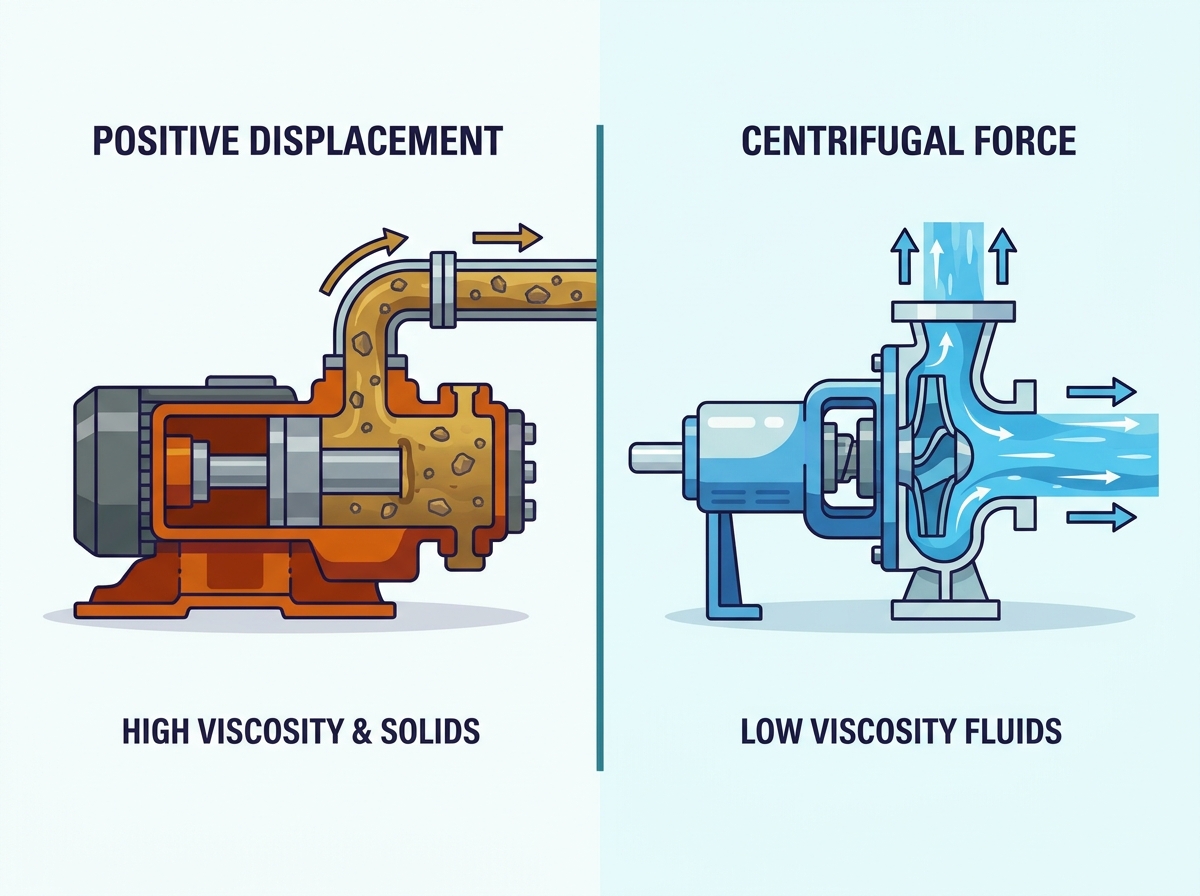
Pumps operate on distinct mechanical principles. Mud pumps rely on positive displacement mechanisms. They use pistons or plungers to force fluid through a confined cylinder chamber. This design guarantees consistent pressure regardless of fluid thickness. The mechanical action physically displaces a set volume of liquid per stroke. Standard water pumps use centrifugal force instead. An impeller spins rapidly inside a volute casing to create suction. This spinning action pushes water outward to generate flow. Centrifugal designs work beautifully for clear, thin liquids. They struggle immensely when pushing heavy, solid-laden mixtures.
Viscosity and specific gravity dictate pump performance in the field. Mud pumps easily move heavy, bentonite-laden fluids. They handle complex polymer mixtures without losing pressure. The positive displacement action physically pushes the dense mud forward. Centrifugal pumps lose efficiency rapidly as fluid viscosity increases. Heavy fluids cause standard pumps to overwork and overheat. The impeller cannot generate enough velocity to move thick mud. This leads to severe flow restrictions and pressure drops.
Abrasive wear tolerance separates these two equipment categories. Drilling fluids contain sand, rock cuttings, and abrasive minerals. Mud pumps feature replaceable, hardened wear parts. You can easily swap out liners, valves, and pistons on site. Manufacturers build these components from high-chrome alloys and durable urethanes. Standard water pumps lack this modular, heavy-duty armor. They suffer irreversible casing and impeller erosion. High-solid content destroys their internal tolerances quickly. Once the casing wears down, the entire pump becomes useless.
Feature | Drilling Mud Pump | Standard Water Pump |
|---|---|---|
Core Mechanism | Positive Displacement (Pistons/Plungers) | Centrifugal Force (Spinning Impeller) |
Fluid Viscosity Handling | High (Bentonite, Polymers) | Low (Clear Water Only) |
Abrasive Wear Resistance | High (Replaceable Hardened Liners) | Low (Irreversible Metal Erosion) |
Pressure Output Profile | High and Consistent | Variable, Drops Significantly |
A drilling mud pump serves as the heart of the rig. It performs three primary functions during well construction. First, it clears cuttings from the bit face. High-pressure fluid blasts away rock fragments to prevent bit clogging. Second, it cools and lubricates the drill string. Friction generates immense heat deep underground. Circulating mud prevents metallurgical damage to your expensive drill bits. Third, it maintains critical hydrostatic pressure. The heavy fluid column prevents blowouts. It also stops unstable borehole walls from collapsing inward.
Application matching ensures operational safety and efficiency. You must deploy a specialized mud pump for well drilling in demanding environments. Deep boreholes require massive pressure to push fluid back to the surface. Reactive clay formations demand specific polymer muds to prevent swelling. Unstable geologies need heavy bentonite mixtures to hold the walls open. A standard pump simply cannot generate the required pressure for these scenarios. Attempting to use one risks losing the entire borehole.
Scalability and maintenance keep operations running smoothly over time. As well depths increase, pressure requirements change dynamically. You need specific drilling mud pump accessories to adapt. Pulsation dampeners smooth out the fluid flow. They utilize nitrogen-charged bladders to absorb damaging pressure spikes. Specialized fluid end expendables extend overall equipment lifespan. Pressure relief valves prevent catastrophic system ruptures. Regular maintenance of these modular components prevents unexpected downtime.
Clear-water pumps excel in specific, limited roles. They work perfectly for initial site dewatering. You can use them to remove surface water before setting up the rig. They easily supply clean water to your active mixing tanks. They also support highly specific, shallow air/water drilling methods. In these scenarios, the fluid remains thin and free of abrasive solids. Centrifugal pumps move high volumes of clean water efficiently. They provide a highly economical solution for basic fluid transfer.
Post-drilling phases require entirely different equipment. Once drilling concludes, you must develop the well and test its yield. This is the perfect time to deploy a submersible water pump. Keep this equipment strictly separate from the active drilling phase. Submersibles handle clean groundwater beautifully. They provide accurate flow data during drawdown and recovery testing. Using them ensures your final well data remains accurate and reliable.
Forcing a centrifugal pump to circulate drilling mud guarantees failure. The failure mechanics are predictable and highly severe. Heavy mud causes violent cavitation inside the pump casing. Vapor bubbles implode against the metal, causing rapid pitting. Abrasive solids destroy mechanical seals within a few hours of operation. The increased fluid density overloads the electric or gas motor. This leads directly to rapid motor burnout. Evidence shows standard pumps lose up to 80% of their efficiency when pumping bentonite mixtures.
Integrating a pump requires careful mechanical planning. Mud pumps demand a larger mechanical footprint on the site. They require substantial power to operate effectively. Many utilize a power take-off (PTO) directly from the main rig engine. Others rely on dedicated, independent diesel engines mounted on separate skids. You must account for this extra space and fuel consumption. Standard water pumps are compact and require significantly less horsepower.
Rig compatibility dictates your overall fluid system setup. Structural integration is vital for water well drilling rigs with mud circulation. Structural integration requires attention to several key areas:
Piping diameters must accommodate thick, high-viscosity fluids without creating friction bottlenecks.
Shaker screens must align perfectly with the return line to separate solids efficiently.
Mud pits need proper baffling to allow heavy cuttings to settle out of the active fluid.
Suction lines must remain short and direct to prevent pump starvation.
A mismatched system creates dangerous bottlenecks and messy fluid overflows.
Implementation risks multiply when you under-size your equipment. An under-sized mud pump cannot maintain adequate annular velocity. Fluid moves too slowly up the vertical borehole. Cuttings fall back down and pack tightly around the drill string. This leads directly to stuck drill pipes. Recovering stuck pipe costs thousands of dollars. It ruins project timelines and frustrates the entire crew.
Geotechnical evaluation drives smart procurement decisions. Base your equipment choices entirely on soil composition and geology. Solid rock and heavy clay mandate high-pressure mud systems. You need immense force to clear heavy cuttings from the hole. Stable, shallow rock formations offer slightly more flexibility. You might successfully use alternative air or clean water systems there. Always audit the geology through core samples or historical well logs before buying equipment.
Evaluate long-term operational expenses versus initial capital expenditure (CapEx). A dedicated mud pump requires a higher initial financial investment. However, misapplying a cheaper water pump guarantees catastrophic downtime. You will face inevitable, frequent replacement costs. The cheaper pump burns out, halting your entire drilling operation. Investing in the correct heavy-duty equipment prevents these expensive operational delays. It protects your bottom line over the lifespan of the project.
Follow these standard evaluation procedures before requesting manufacturer quotes:
Calculate your required gallons per minute (GPM) to ensure adequate volume.
Determine your annular velocity requirements based on the specific borehole diameter.
Factor in the maximum anticipated drilling depth to calculate total pressure needs.
Assess the anticipated fluid density based on required mud additives.
Evaluate the available power supply on your current drilling rig.
These specific metrics dictate your exact pump specifications. They prevent costly purchasing mistakes.
A water pump serves as a basic utility tool. A drilling mud pump stands as a core production asset. You cannot substitute one for the other without severe consequences. Using the right pump ensures borehole stability. It protects your expensive drill string from getting stuck.
Audit your upcoming project geologies carefully. Consult with experienced fluid engineers to determine your exact pressure and volume needs. Select the pump specifications required for safe, compliant, and efficient drilling. Do not compromise on your fluid circulation system. Make the smart investment upfront to guarantee operational success.
A: No. Trash pumps handle solids but lack the necessary pressure capabilities. They use centrifugal force, which cannot overcome the hydrostatic head required to push fluid down a drill string and back up the annulus. Positive displacement mud pumps are mandatory for maintaining consistent pressure and clearing cuttings, even in shallow wells.
A: Pulsation dampeners and replaceable fluid end expendables are critical. Dampeners absorb pressure spikes, protecting your hoses and rig piping from violent vibrations. Replaceable liners, pistons, and valves take the brunt of abrasive wear. Swapping these parts regularly prevents permanent damage to the pump housing.
A: You calculate flow rate by determining the necessary annular velocity. First, identify your borehole diameter and drill pipe outside diameter. Use these to find the annular volume. Multiply this volume by your target upward fluid velocity (typically 100 to 120 feet per minute) to find the required gallons per minute.
A: Yes. Drilling fluids contain abrasive rock cuttings, sand, and heavy clays. These solids quickly destroy the mechanical seals and plastic or brass impellers inside a standard submersible pump. Submersibles are designed strictly for clear groundwater and will suffer catastrophic motor failure if submerged in active drilling mud.


