


Views: 0 Author: Site Editor Publish Time: 2026-08-25 Origin: Site


High-stakes mining, infrastructure, and geotechnical projects rely entirely on intact, continuous subsurface data. Assumptions based on fragmented data often lead to structural failures or massive financial losses. Selecting the wrong drilling equipment directly causes poor core recovery, excessive mechanical downtime, and compromised geological data in challenging formations. You need machinery matched precisely to the ground conditions. This guide provides a technical framework for evaluating, shortlisting, and procuring the correct geological core drilling rig based on depth requirements, terrain accessibility, and specific project success criteria. We will break down the mechanics, application matching, and technical specifications required to maximize sample integrity and drilling efficiency in the field.
Application Matching: The choice between a geological survey core drilling rig and a mineral exploration core drilling rig dictates required depth capacity, mobility, and power output.
Core Recovery is King: Rig selection must prioritize features that maximize intact core recovery (e.g., wireline systems, automated rod handling) in the specific target geology.
Downstream Data Value: The ultimate goal is not just drilling, but producing pristine, continuous cylindrical samples for accurate geochemical assaying and structural logging.
Mobility vs. Capability Trade-off: High-depth capacity inherently increases rig footprint and weight, requiring careful evaluation of site access, environmental compliance, and transport logistics.
The architecture of a modern drilling rig centers around several high-stress, precision-engineered components working in unison. The primary systems include the rotary drill head, the mast assembly, hydraulic feed cylinders, and the main power unit. The rotary drill head, whether a top drive or a traditional chuck system, delivers consistent rotational torque to the drill string. This component must maintain precise RPMs under extreme loads to prevent the diamond bit from polishing or burning out against hard rock formations like quartzite or granite.
The mast assembly provides the structural framework necessary to support the weight of the drill string and the pullback forces exerted during rod extraction. Heavy-duty lattice or box-channel masts resist the torsional stress generated during deep-hole operations. Hydraulic feed cylinders apply the exact downward pressure—known as weight on bit (WOB)—required to advance the cutting tool through varying lithologies. Together, these systems supply the mechanical force needed to drive steel pipe hundreds or thousands of meters through solid bedrock. Operators constantly adjust these hydraulic parameters to match the changing density and abrasiveness of the subsurface materials.
Unlike destructive drilling methods such as rotary mud or down-the-hole (DTH) hammering, which pulverize rock into fine cuttings, core drilling is designed for preservation. The mechanics involve a hollow, diamond-impregnated drill bit that cuts an annular hole, leaving a solid cylinder of rock intact in the center. As the drill string advances, this rock cylinder feeds directly into a specialized inner tube located just behind the drill bit, held in place by a core lifter.
Preserving the structural integrity of the sediment or rock mass is the primary objective. Once the inner tube is full, crews retrieve it to the surface. The immediate post-extraction process dictates the quality of the downstream data. Drillers carefully slide the intact core from the inner tube into standardized core boxes. These boxes preserve the exact stratigraphic sequence, moisture content, and structural orientation of the sample. Geologists then log these samples on-site, analyzing fault lines, mineral veins, and rock mechanics before sending them to laboratories for detailed geochemical assaying. Handling the core roughly at this stage can induce artificial fractures, ruining the geotechnical value of the sample.
Mining operations operate under extreme parameters, requiring specialized equipment to locate and define ore bodies deep underground. A mineral exploration core drilling rig is engineered for extreme depth capabilities, often exceeding 1,000 meters into the earth's crust. These machines must operate continuously in remote, hard-rock environments where logistical support is minimal and weather conditions are harsh.
The core extracted during these deep-hole operations is the lifeblood of the mining lifecycle. Downstream, these continuous samples undergo rigorous geochemical assaying to verify the exact presence, grade, and distribution of precious metals or base minerals. Geologists use this physical data to construct highly accurate 3D ore body models. These models dictate the financial viability of the mine, guiding the placement of future shafts, open pits, and processing facilities. Without pristine core samples, mining companies cannot secure the necessary capital investment to advance the project. The rig must deliver consistent performance shift after shift to keep exploration costs per meter viable.
Civil engineering, environmental monitoring, and geohazard response require a different approach to subsurface investigation. A geological survey core drilling rig is typically deployed for shallow to medium-depth sampling, focusing heavily on soil mechanics, bedrock stability, and groundwater conditions. These rigs often incorporate standard penetration test (SPT) trip hammers and auger capabilities alongside traditional coring.
These rigs are frequently utilized in high-stakes infrastructure projects. Before constructing a hydroelectric dam or a massive suspension bridge, engineers must verify that the underlying bedrock can support the immense structural load without fracturing. Following seismic events, survey rigs investigate post-earthquake landslides, determining the slip plane and the risk of secondary failures. In environmental applications, these rigs extract samples to detect soil contamination plumes. This requires strict fluid management and specialized sampling tubes to prevent cross-contamination between aquifers during the drilling process.
The definitive key performance indicator for any core drilling operation is the core recovery rate. You calculate this metric by dividing the length of the intact core recovered by the total depth drilled in a specific run. A high recovery rate indicates that the drilling parameters perfectly match the ground conditions, yielding a complete and accurate geological record.
Achieving near-100% recovery requires meticulous control over several variables. Rig stability is paramount; any vibration transferred down the drill string can fracture brittle rock samples. Precise RPM control prevents the diamond bit from grinding the core into gravel. Furthermore, optimal drilling fluid management is essential. The fluid must cool the bit and flush cuttings up the annulus without washing out soft or friable core samples. Failure to balance these factors results in core washing, grinding, or blocking, severely degrading the value of the extracted data.
Recommended Drilling Parameters by Formation Type
Formation Type | Recommended RPM | Weight on Bit (WOB) | Drilling Fluid Strategy |
|---|---|---|---|
Soft Clays / Soils | Low (100 - 200) | Low | Thick bentonite mud, low pump pressure |
Fractured / Broken Rock | Medium (300 - 500) | Low to Medium | Polymer additives to stabilize hole walls |
Competent Hard Rock | High (800 - 1200+) | High | Clean water with soluble cutting oils |
Abrasive Sandstone | Medium (400 - 600) | Medium | High flow rate to clear abrasive cuttings |
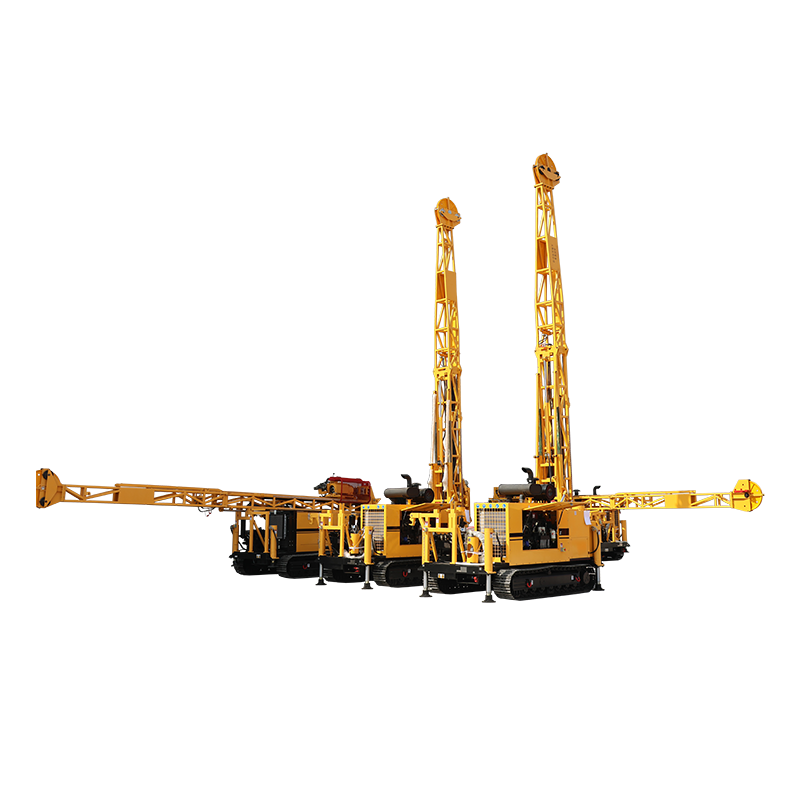
The physical location of the drill site dictates the fundamental architecture of the machine. Surface rigs feature larger footprints, towering mast structures, and high-horsepower diesel engines. They handle massive drill string weights and operate in open environments where space and ventilation are not limiting factors. You will typically see these mounted on heavy skids or large crawler tracks.
Conversely, underground rigs are engineered for confined spaces. These machines are highly compact, often featuring articulated chassis to navigate narrow mine galleries. Because they operate in enclosed environments with strict ventilation and emission standards, underground rigs rely heavily on electric or electro-hydraulic power units. They utilize specialized 360-degree feed frames that can drill at any angle—upwards into the roof, downwards, or horizontally—to fan out exploration holes from a single underground drift without repositioning the entire carrier.
Mobility solutions directly impact project timelines and logistics. Crawler-mounted rigs utilize steel or rubber tracks, distributing the machine's weight over a large surface area. This design provides exceptional traction and low ground-bearing pressure, making them the ideal choice for rugged, uneven, muddy, or heavily forested terrain. They can crawl into positions that wheeled vehicles simply cannot reach, reducing the need for expensive access road construction.
Truck-mounted rigs prioritize rapid transit and multi-site efficiency. Mounted on heavy-duty commercial truck chassis, these rigs travel at highway speeds between drill sites. They are perfectly suited for projects spanning large geographic areas with existing road infrastructure, such as regional water well monitoring or highway expansion surveys. Power is often derived directly from the truck's engine via a power take-off (PTO) or a separate deck engine. However, their reliance on stable, load-bearing ground limits their off-road capabilities.
For extreme remote access, modularity is the primary design requirement. Portable and heli-portable rigs are constructed from lightweight, easily assembled modules. Manufacturers specifically size and weight these components to be transported by helicopters or small bush planes into fly-in exploration camps located in mountains, jungles, or arctic tundras. Aluminum masts and compact hydraulic power packs keep individual lift weights under the payload limits of common helicopters.
Deploying a heli-portable rig involves inherent trade-offs. While they provide access to otherwise unreachable targets, their modular nature limits their maximum depth capacity compared to heavy surface rigs. Additionally, the setup and teardown times are significantly longer, as crews must manually assemble the rig on-site using hand tools and portable winches. Operators must carefully weigh the high cost of helicopter logistics against the geological potential of the remote target.
Evaluating a rig's capability requires matching its mechanical specifications to the anticipated depth and diameter of the core hole. The most critical metrics are hoist capacity, mast structural strength, and rotational torque. As the hole deepens, the cumulative weight of the steel drill rods increases exponentially. The rig must possess sufficient pullback force to extract the entire drill string safely without exceeding the mast's safe working load or stalling the hydraulic system.
Core sizes are standardized globally, with larger diameters requiring exponentially more power to drill and hoist. Operators must select a rig that can handle the specific rod size required for the target depth. A rig rated for 1,000 meters of NQ rod will not be able to drill 1,000 meters of PQ rod due to the massive difference in steel weight and required cutting torque.
Standard Core Size Specifications and Capacities
Core Size Designation | Hole Diameter (mm) | Core Diameter (mm) | Approx. Rod Weight (kg/m) |
|---|---|---|---|
BQ | 60.0 | 36.5 | 4.6 |
NQ | 75.7 | 47.6 | 7.8 |
HQ | 96.0 | 63.5 | 11.6 |
PQ | 122.6 | 85.0 | 17.5 |
For deep-hole drilling, wireline coring technology is an absolute necessity. In conventional coring, the entire drill string must be pulled out of the hole every time the core barrel is full—a process known as tripping. At depths of 1,000 meters, tripping rods can take hours, drastically reducing actual drilling time and increasing the risk of hole collapse.
Wireline systems eliminate this inefficiency. The inner tube, which contains the rock sample, is designed to be retrieved independently of the drill string. An overshot is lowered down the center of the hollow drill rods on a steel wire cable. It latches onto the inner tube and hoists it to the surface in minutes. The empty inner tube is then dropped back down, and drilling resumes immediately. Evaluating a geological core drilling rig for its integrated wireline winch capacity, spooling capacity, and line speed is crucial for deep exploration efficiency.
The choice of power system impacts both performance and regulatory compliance. Modern surface rigs are typically powered by advanced diesel engines. In highly regulated regions, these engines must meet strict Tier 4 Final or Stage V emission standards. This requires the use of diesel exhaust fluid (DEF) and diesel particulate filters (DPF) to minimize environmental impact and eliminate black smoke.
In sensitive survey areas, such as urban centers or protected watersheds, noise reduction and fluid containment become critical evaluation dimensions. Rigs must be equipped with acoustic enclosures to dampen engine noise and protect local communities from noise pollution. Furthermore, strict zero-spill policies require rigs to feature integrated fluid containment trays and advanced mud-recycling systems. These systems prevent drilling additives, hydraulic oil, or fuel from contaminating the local soil and groundwater.
A fundamental physical limitation governs rig design: deeper drilling requires heavier drill strings. To handle this immense weight, the rig must feature a larger, reinforced mast, heavy-duty hydraulic pumps, and a massive power unit. Consequently, the overall footprint and gross vehicle weight of the machine increase dramatically.
This creates a direct trade-off with mobility. A massive deep-hole rig requires wide, stable access roads, extensive site preparation, and heavy transport trucks to move between locations. It cannot navigate tight forest trails or steep mountain gradients. Project planners must balance the geological requirement to drill deep against the logistical reality of accessing the drill pad. Over-specifying a rig's depth capacity often leads to stranded equipment or exorbitant road-building costs that ruin the exploration budget.
Procurement decisions often center on the tension between upfront costs and long-term operational viability. Premium, automated drilling rigs carry a significantly higher initial capital expenditure compared to basic, manual models. However, evaluating the equipment purely on the sticker price ignores the long-term economics of the drilling program.
Advanced rigs generate substantial savings over their maintenance lifespan. Automated rod handling systems reduce crew fatigue and drastically lower the incidence of costly workplace injuries. Precision hydraulic controls prevent premature wear on diamond bits and drill rods, extending consumable life. Furthermore, high-quality OEM components experience fewer catastrophic failures, reducing unscheduled mechanical downtime. Over a multi-year exploration campaign, the higher daily meterage and reduced labor costs of a premium rig quickly offset the initial investment.
Subsurface conditions are inherently unpredictable. Drillers frequently encounter fault zones, highly fractured rock, reactive clays, and underground voids. These formations present severe risks, including stuck drill strings, collapsed holes, and total fluid loss, where the drilling mud escapes into underground fissures rather than returning to the surface to flush cuttings.
Mitigating these risks requires highly adaptable equipment. Rigs must feature variable hydraulic controls that allow the operator to instantly adjust torque and feed pressure when hitting a void or hard seam. Additionally, deploying compatible, high-capacity mud-mixing systems is essential. These systems allow crews to rapidly mix specialized drilling polymers and bentonite clays to stabilize crumbling hole walls and seal off fluid-loss zones before the drill string becomes permanently trapped.
Core drilling is physically demanding and historically associated with high injury rates. The most significant risk comes from manual rod handling. Drillers and helpers routinely lift, thread, and unthread heavy steel pipes covered in slippery drilling fluids while working near rotating machinery. Hand injuries, back strains, and entanglement accidents are major operational risks that can shut down a site.
Modern procurement strategies prioritize rigs engineered for operator safety and ergonomics. Mitigation involves selecting equipment fitted with hands-free rod handlers, which mechanically lift and position the drill rods without human intervention. Safety cages with interlock switches immediately shut down rotation if the guard is opened during operation. Additionally, remote control tramming allows the operator to stand at a safe distance while maneuvering the rig over treacherous terrain, eliminating the risk of rollover injuries.
A drilling rig is only profitable when it is turning to the right. Mechanical breakdowns are inevitable, but extended downtime due to unavailable replacement parts can destroy a project's timeline. Purchasing a rig from a manufacturer with a weak aftermarket support network creates the severe risk of possessing a stranded asset in the field.
To mitigate supply chain risks, operators should standardize their fleets on rigs built with globally available, non-proprietary hydraulic components. This includes standard pumps, valves, and hoses that can be sourced locally if necessary. Furthermore, thorough vetting of the original equipment manufacturer is required. Ensure the manufacturer has proven service networks, regional parts depots, and technical support teams capable of dispatching replacement components to remote sites within 24 to 48 hours.
To ensure the right equipment is deployed for your next drilling campaign, execute the following steps:
Define the exact target depth and required core diameter to establish baseline hoist and torque requirements.
Assess the terrain, site access limitations, and local environmental regulations to determine the necessary mobility platform and power system.
Compile a comprehensive list of geotechnical requirements and request detailed specification sheets from reputable manufacturers.
Prioritize rigs equipped with advanced safety features, automated rod handling, and proven wireline capabilities to maximize daily meterage.
Schedule field demonstrations or conduct reference calls with existing operators to verify real-world performance and aftermarket parts availability.
A: Reverse circulation (RC) drilling utilizes a pneumatic hammer to produce small rock cuttings and chips, which are blown to the surface for rapid geochemical analysis. Core drilling utilizes a diamond-impregnated bit to extract intact, continuous cylindrical rock samples. These preserved cylinders are essential for detailed structural, geotechnical, and stratigraphic logging.
A: Specialized surface coring rigs are engineered for extreme depths. Depending on the specific mast capacity, hoist strength, and the core diameter being used, high-capacity exploration rigs can successfully exceed depths of 2,000 to 3,000 meters into hard rock formations.
A: Core recovery rates are heavily influenced by the operator's skill and the machine's capabilities. Critical factors include overall rig stability, precise control of weight-on-bit (WOB), accurate rotational speed (RPM) management, and the use of appropriate drilling fluid mixtures to prevent washing out soft formations.
A: Immediately after extraction, the intact rock cylinders are carefully transferred from the inner tube into standardized core boxes to preserve their orientation. Geologists log the samples for structural defects, fractures, and lithology. Finally, the cores are often split in half longitudinally for precise geochemical assaying in a laboratory.
A: A wireline system drastically improves deep-hole efficiency. Instead of pulling the entire drill string out of the hole, an overshot device is lowered down the hollow drill rods on a steel wire cable. The overshot latches onto the inner tube containing the core sample and hoists it directly to the surface.
A: The choice depends entirely on site access. Use a truck-mounted rig for projects requiring frequent highway travel between flat, easily accessible sites. Choose a crawler-mounted rig for off-road operations, steep gradients, muddy conditions, or environments requiring low ground-bearing pressure to navigate safely.


