


Views: 0 Author: Site Editor Publish Time: 2026-10-17 Origin: Site


Water scarcity is rapidly evolving into a critical global challenge. As surface water depletes, municipalities and agricultural contractors are forced to seek out highly reliable equipment to access deeper, more elusive groundwater reserves. Yet, navigating the procurement landscape is notoriously difficult. Today's market is saturated with unproven manufacturers and middlemen. This makes it exceptionally tough to find a trustworthy supplier that balances upfront costs with uncompromising quality and robust after-sales support.
In this comprehensive guide, we will walk you through everything required to make an informed capital investment. From evaluating specific rig configurations based on field engineering to vetting overseas factories and calculating your true return on investment, this resource is designed to help high-intent buyers secure the exact machinery needed for rigorous daily operations.
Selecting the appropriate groundwater extraction equipment depends strictly on local geological strata, target depth, and site accessibility.
Partnering with an established manufacturer guarantees long-term after-sales support, robust warranty coverage, and stable spare parts availability.
Distinguishing between heavy-duty crawler hydraulic systems and rotary table drives is critical for optimizing on-site operational efficiency.
Evaluating the Total Cost of Ownership and Return on Investment provides a much more accurate financial picture than initial purchase prices alone.
Applying a strict vetting process for overseas manufacturers mitigates risks associated with equipment downtime, poor metallurgy, and logistical delays.
Before committing to a significant capital expenditure, buyers must grasp the fundamental engineering that dictates heavy machinery performance. A commercial extraction unit is a complex integration of mechanical, hydraulic, and structural systems. These systems are specifically engineered to penetrate various earth formations safely and efficiently.
The reliability of any extraction equipment is ultimately determined by the integrity of its core components. Take the mast, for example. It bears the brunt of operational stress. When the drill bit hits solid granite at 150 meters, a substandard mast will shudder violently and risk structural failure. High-quality masts are constructed from high-yield-strength structural steel to prevent dangerous deformation under maximum pullback loads.
Furthermore, the hydraulic system acts as the nervous system of the machine. Premium setups utilize load-sensing hydraulic pumps. These intuitive systems adjust fluid flow based on underground resistance, thereby reducing heat generation and slashing daily fuel consumption. If you are aiming for extreme depths, investing in a robust deep well drilling rig equipped with these advanced hydraulics is not just an option; it is an absolute necessity to prevent borehole collapse.
Looking at recent industry data and environmental reports, the escalating frequency of prolonged global droughts has fundamentally shifted groundwater extraction trends. We are seeing water tables drop significantly across major agricultural zones. Municipalities are now forced to tap into aquifers sitting at 200 to 400 meters—depths previously untouched by standard residential equipment.
Consequently, the market is experiencing a rapid transition toward automated, high-torque hydraulic equipment capable of sustaining prolonged drilling cycles without operator fatigue. The era of relying on obsolete, purely mechanical setups for deep-water extraction is ending. This macro-trend underscores the necessity of investing in adaptable, high-pullback machinery that can handle the increased weight of longer drill strings.
For government contractors, large-scale drilling enterprises, and regional distributors, purchasing directly from a factory has become the standard procurement strategy. Buying wholesale offers distinct advantages over acquiring single, marked-up units through third-party brokers.
Specifically, wholesale procurement allows businesses to standardize their fleets. Fleet standardization means that operators only need to master one control system. Meanwhile, maintenance crews can stock a unified inventory of spare parts, drastically reducing unexpected downtime. Purchasing in volume also opens the door to direct-from-factory customization, ensuring that the fleet is specifically engineered for the buyer's unique regional geological challenges.
Leading manufacturers offer a diverse portfolio of equipment, recognizing that no single machine is universally optimal for all terrains. Understanding these distinct categories is the vital first step in matching hardware to your project specifications.
These configurations rely on a mechanical drive system that provides exceptional, steady torque. As a result, a rotary table drive water drilling rig is highly effective for boring large-diameter wells in soft to medium geological formations, such as clay, sand, and loose gravel. Because they utilize straightforward mechanical linkages rather than complex hydraulic motors for rotation, they are incredibly durable. They are also far easier to repair in remote locations where advanced hydraulic diagnostics might be completely unavailable.
When projects demand operation in rugged, mountainous, or muddy terrains, a heavy-duty crawler hydraulic water rig is the premier choice. Mounted on wide steel or rubber tracks, these self-propelled machines distribute their massive weight over a larger surface area, preventing them from sinking into soft ground. They typically feature top-head drive hydraulic motors delivering over 6,000 N.m of rotary torque. This allows crews to rapidly add drill pipes and achieve high-speed penetration rates, especially when paired with a Down-The-Hole hammer in unyielding hard rock formations.
Feature | Rotary Table Drive Rigs | Crawler Hydraulic Rigs |
|---|---|---|
Ideal Geology | Clay, sand, loose gravel, soil | Hard rock, granite, limestone, mixed strata |
Drive Mechanism | Mechanical transmission | Top-head hydraulic motor |
Mobility | Usually trailer or truck-mounted | Self-propelled steel/rubber tracks |
Maintenance Complexity | Low to Medium | High requires hydraulic expertise |
Primary Drilling Method | Mud rotary circulation | Air DTH hammer and mud rotary |
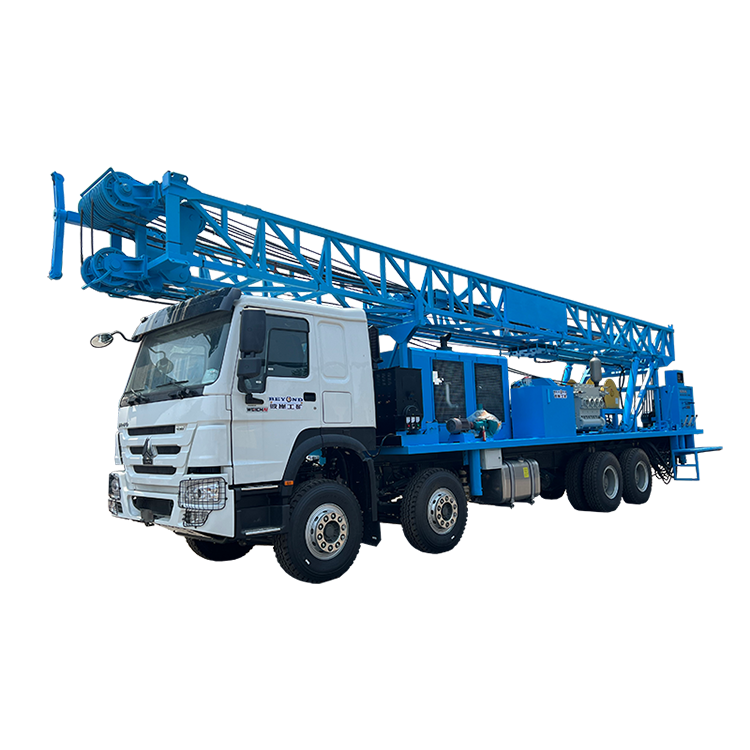
Selecting the right equipment requires a clinical assessment of your daily operational environment. Buyers must meticulously map their specific project requirements against the technical specifications of the machinery before making a final decision.
The geological makeup of your primary operational region dictates the required drilling method. If your target market consists mostly of hard rock, granite, or limestone, the rig must be compatible with air drilling using a high-pressure air compressor and a DTH hammer. Conversely, if you are drilling through collapsible formations like loose sand or thick clay, mud rotary drilling is mandatory. This necessitates a rig equipped with a high-volume mud pump to circulate drilling fluid, stabilize the fragile borehole walls, and efficiently bring cuttings to the surface.
Not all rigs are engineered for extreme depths. A true deep extraction system must possess a heavily reinforced mast and a heavy-duty hydraulic winch capable of handling immense pullback forces. As depth increases, the cumulative weight of the connected drill pipes grows exponentially. For instance, reaching 300 meters requires a machine with a lifting capacity exceeding 15 to 20 tons. If a machine's pullback capacity is exceeded, the drill string can become permanently trapped deep in the earth. Always calculate your average required depth and select a machine that offers at least a 20 percent safety margin in pullback force.
The engine is the beating heart of the entire operation. Uninterrupted power is non-negotiable; a sudden loss of power can cause the borehole to collapse around the drill string instantly. Therefore, look for rigs equipped with globally recognized turbocharged diesel engines. These engines are preferred not only for their consistent torque output under heavy loads but also because their replacement fuel injectors and filters are universally accessible across different continents.
The B2B marketplace is crowded with entities claiming to be premium manufacturers. Distinguishing a genuine, high-quality factory from a trading company or a substandard assembler is the most critical phase of the entire procurement process.
A reliable supplier operates a transparent manufacturing facility governed by strict quality control protocols. Buyers should always request proof of ISO 9001 certification, which guarantees standardized quality management, alongside CE marking if operating in regulated zones. It is highly recommended to conduct a virtual factory tour to visually verify the supplier's CNC machining capabilities, automated welding standards, and assembly line cleanliness. Trading companies often lack direct control over these processes, which frequently leads to inconsistent quality across a bulk order.
Because geological challenges are highly localized, off-the-shelf rigs may not always suffice. A top-tier wholesale water well drilling rig supplier possesses the in-house engineering capabilities to offer customized modifications. Whether it involves extending the mast to accommodate 6-meter drill pipes, upgrading the hydraulic cooler for blistering tropical climates, or reinforcing the crawler chassis for highly abrasive terrains, a supplier’s willingness to provide engineered customizations is a strong indicator of their technical pedigree.
Procuring heavy machinery is a significant capital expenditure that directly impacts your company's operational capacity and bottom line. To mitigate financial risk and ensure continuous on-site performance, procurement managers should adhere to a strict set of evaluation criteria.
Heavy drilling equipment operates in highly abrasive, demanding environments. Even the most robustly engineered machines will eventually require maintenance, wear-part replacements, and technical troubleshooting. When evaluating a borehole drilling machine supplier, remember that the initial transaction is merely the beginning of a decade-long relationship.
Prioritize suppliers that maintain a comprehensive, globally accessible inventory of spare parts. Ask potential manufacturers about their supply chain logistics for critical components such as hydraulic piston pumps, drill bits, and rotary head motors. A broken fifty-dollar hydraulic valve can cost a contractor thousands of dollars a day in idle crew time and penalty fees if the part takes weeks to ship.
Claims of high performance must be substantiated by empirical evidence. Before finalizing a purchase, request detailed case studies and unedited operational videos from the manufacturer. You need verifiable proof that their equipment performs efficiently in geological conditions identical to your target work sites. Speaking directly with past clients about the machine’s real-world fuel consumption and the responsiveness of the manufacturer's technical support team provides invaluable intelligence.
A common pitfall in B2B procurement is prioritizing the lowest initial purchase price over the Total Cost of Ownership. In the heavy machinery sector, unusually low wholesale prices almost always indicate hidden compromises in metallurgy, hydraulic system integrity, or engine reliability. Substandard steel used in the mast can lead to catastrophic structural failures, while cheap, unbranded hydraulic hoses are prone to bursts and pressure drops. Ultimately, the cheapest rig on paper often becomes the most expensive rig to operate and maintain.
For established drilling contractors, deciding when to retire an aging fleet and invest in new machinery requires careful financial analysis. Upgrading to a modern platform is not merely an expense. It is a strategic maneuver designed to expand capabilities, reduce overhead, and accelerate project completion times.
The primary indicator that it is time to upgrade is the escalating cost of maintaining older equipment. As rigs age past their optimal lifecycle, metal fatigue, hydraulic wear, and engine degradation become unavoidable. A standard industry benchmark is the 50 Percent Rule. If the annual cost of repairs, replacement parts, and associated downtime exceeds half of the equipment's current market value, retaining the machine becomes economically unviable. Transitioning to a new rig eliminates unpredictable repair spikes, allowing businesses to forecast their annual budgets with pinpoint accuracy.
To present a compelling business case to stakeholders, buyers must calculate the projected payback period. This is the exact amount of time or number of completed projects required to recover the cost of the new machinery. This requires a realistic assessment of your local market rates, average project duration, and the operational costs of the new rig. Once you determine the net profit per well and divide the total capital expenditure by that figure, you can clearly see how many successful boreholes are required to break even.
Careful geological research is the bedrock of choosing the right equipment. Consequently, thoroughly vetting your manufacturer before signing a purchase order is absolutely essential. Whether you require the high-speed mobility of a truck-mounted unit or the rugged stability of a heavy-duty crawler with massive pullback force, matching your hardware to specific terrain and depth requirements dictates your operational success.
Ultimately, securing a reliable manufacturing partner guarantees long-term project viability. By prioritizing advanced hydraulics, robust after-sales support, and verifiable cost calculations over merely finding the lowest price, contractors can build a highly profitable, resilient fleet. Take the time to evaluate your current operational bottlenecks today. We highly recommend visiting BeyondRig to explore a comprehensive lineup of field-tested machinery and discuss a custom-engineered solution that fits your exact drilling requirements.
With rigorous preventative maintenance, daily lubrication, and adherence to operational guidelines, a commercial-grade rig can reliably operate for 15 to 20 years. The longevity depends heavily on the initial metallurgical quality of the mast and chassis, as well as partnering with a reliable supplier who ensures continuous access to OEM replacement parts throughout the machine's entire lifecycle.
Yes, reputable manufacturing facilities offer extensive customization services. Depending on your regional geology and climate, suppliers can modify the chassis by upgrading to wider steel tracks for muddy conditions, install higher-capacity mud pumps for collapsing sandy soils, or adjust the overall mast height to accommodate specific drill pipe lengths preferred by your crew.
A deep well system is specifically engineered to handle the extreme physical stresses of drilling well beyond 300 meters. These heavy-duty machines feature heavily reinforced structural masts, significantly higher pullback forces to lift massive drill strings, superior rotary head torque for sustained hard rock penetration, and oversized hydraulic cooling systems designed for continuous, multi-day operation without overheating.
Your choice depends entirely on the ground formation. If you are drilling through soft, unstable formations like sand, clay, or loose dirt, a mud pump is required to circulate fluid and build a protective wall inside the borehole to prevent collapse. If you are drilling through solid rock, limestone, or granite, you need an air compressor paired with a DTH hammer to pulverize the rock and blow the heavy cuttings to the surface.
Beyond standard fuel and oil changes, hidden costs often stem from hydraulic system wear and drill string fatigue. High-pressure hydraulic hoses degrade over time and require proactive replacement to prevent catastrophic field bursts. Additionally, drill bits and DTH hammers are consumable items that wear out rapidly in highly abrasive rock. Factoring in these consumable wear parts is critical for accurate project bidding.
To guarantee parts availability and minimize operational downtime, buyers should exclusively partner with suppliers that offer comprehensive, written warranties and maintain a robust global inventory. Prioritize manufacturers that integrate standardized, internationally recognized brands for critical components like diesel engines and hydraulic valves. This ensures that replacement parts are easily shippable and widely available in your local markets.


