


Views: 0 Author: Site Editor Publish Time: 2026-10-09 Origin: Site


Are you aware that unforeseen mechanical breakdowns are the leading cause of operational downtime on job sites? Many equipment buyers find it challenging to select the optimal rig configuration. Failing to comprehend how individual components work together can easily result in blown budgets and severe project delays. Before investing your capital in new machinery, fully understanding the complex mechanics of your equipment is essential to maximize your overall return on investment.
Within this in-depth guide, we bypass the marketing jargon to examine the core mechanical aspects of your equipment. We will show you exactly how to assess and choose the appropriate components for your day-to-day operations. Whether your goal is to modernize an older fleet or invest in a brand-new water well drilling rig, this article details everything necessary regarding the configuration, maintenance, and anatomy of vital subsurface machinery.
A functional rig is built upon five vital interconnected systems operating together: Power, Hoisting, Rotation, Circulation, and the Drill String.
Choosing a top-drive mechanism versus a classic rotary table setup should be based entirely on the geological conditions and intended depth of your projects.
Serving as the heart of the fluid circulation system, the mud pump is critical for cooling the drill bit and ensuring the stability of the borehole.
Enforcing rigorous, field-tested daily maintenance routines will drastically prolong the life of your equipment and safeguard your profit margins.
Prior to exploring the physical mechanics, operators must grasp the future trajectory of rig engineering. Current market trends point toward a strong integration of smart diagnostics across drilling platforms. Forward-thinking contractors are actively seeking equipment integrated with IoT technology to continuously track rotational torque, fluid flow, and hydraulic pressure in real-time.
This digital leap transforms field management from a reactive repair model to a predictive maintenance approach. Rather than experiencing unexpected valve blowouts during crucial operations, rig managers now get proactive dashboard notifications about pressure anomalies well in advance of a failure. As modern machinery requires professionals who can translate digital alerts into physical maintenance actions, having a deep understanding of your rig's anatomy is now more vital than ever.
For maximum efficiency, contemporary drilling rigs need to operate as a seamlessly integrated ecosystem. When assessing heavy machinery, purchasers must evaluate more than just basic horsepower numbers. It is vital to comprehend how each distinct assembly influences the machine's true mechanical performance in harsh field environments.
Every standard drilling project depends on five synchronized mechanical networks. The Hoisting unit supports the massive load of the drill string while executing precise lifting tasks. Concurrently, the Rotating assembly delivers the sheer torque necessary to break through tough rock and compacted earth. The Circulating mechanism is responsible for flushing out cuttings to keep the borehole stable. Raw energy for the hydraulics is supplied by the Power system. Lastly, the Control console empowers the operator to safely and accurately manage flow, pressure, and operating speeds.
It is crucial that these five systems are harmoniously matched during the purchasing process. Combining an underpowered hoisting mast with an excessively heavy drill string will rapidly cause structural fatigue. Such equipment mismatches generate severe mechanical stress, significantly increasing the risk of catastrophic breakdowns during active drilling.
The dependability of your components has a direct impact on your operation's profitability. A sheared critical gear instantly triggers financial losses caused by expensive emergency repairs and halted labor. Sourcing premium OEM components guarantees a much better return on investment over time. Precision-machined hydraulic systems and high-grade steel are built to withstand the intense vibrations and abrasive conditions of the drilling site. Choosing cheap aftermarket alternatives often leads to rapid mechanical fatigue, ultimately costing operators far more through continuous field repairs.
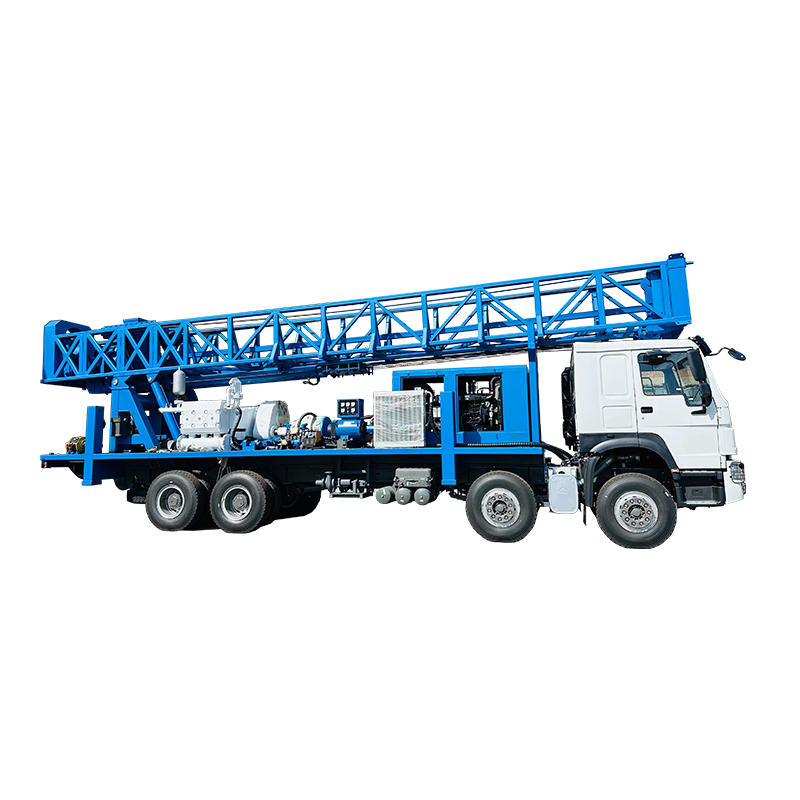
The rotation system carries the heavy responsibility of pushing intense torque far beneath the surface. For serious equipment buyers, selecting the right rotation mechanism is one of the most critical decisions to make. This choice directly influences your pipe-handling speed and your rig's ability to conquer challenging rock formations.
Today's mechanical power head drilling rig features a robust motor attached straight onto the sliding mast. Acting as a top-drive, this setup powers the drill string from above, offering precise rotational control alongside continuous downward thrust. High-end top-drive systems frequently provide adjustable speeds ranging from 0 to 120 RPM and boast torque ratings well above 6,500 N.m. This design's major operational benefit lies in its pipe-handling efficiency, allowing deck crews to connect and insert drill rods much faster than traditional approaches. Thanks to their variable speed capabilities, power head rigs seamlessly adjust to unpredictable and difficult geological shifts.
In contrast, a classic rotary table well drilling machine generates its turning force directly at the floor level. Torque is transferred downward using a thick-walled pipe known as a Kelly, which travels vertically through a drive bushing seated in the rotating table. This configuration is widely praised for its mechanical straightforwardness and rugged durability. Because it operates without the intricate hydraulic networks found in top-drive units, it offers an economical choice for independent drillers. Rotary table setups perform exceptionally well when constructing deep, large-diameter bores in stable geologies that require relentless, high-torque power.
Ultimately, your equipment selection should be guided by hard project data, not merely driven by initial budget constraints or personal bias.
| Evaluation Criteria | Mechanical Power Head Top Drive | Rotary Table System |
|---|---|---|
| Upfront Investment | Greater initial capital required | Low to moderate entry costs |
| Rod Handling Efficiency | Quicker connections minimize idle time | Requires slower, manual Kelly adjustments |
| Optimal Geological Conditions | Unpredictable, rocky, and complex ground | Consistent formations and deep sedimentary layers |
| Primary Applications | Versatile shallow to medium-depth projects | Large-diameter, deep municipal water wells |
| Maintenance Requirements | Demands skilled hydraulic troubleshooting | Simple mechanical lubrication and upkeep |
Sinking a standard well generates thousands of pounds of heavy clay and crushed stone, all of which require continuous removal from the hole. Without a robust circulation system to consistently flush out this debris, the drill string would quickly seize, bringing operations to a complete standstill.


