


Views: 0 Author: Site Editor Publish Time: 2026-09-01 Origin: Site


Think of a mud pump not merely as a piece of equipment, but as the pulsating operational heart of your drilling rig. When this critical machinery fails, the entire site grinds to an expensive halt. You simply cannot move forward without reliable fluid circulation.
We define this system as a heavy-duty reciprocating pump built for extreme conditions. Engineers specifically design it to push abrasive drilling fluid under massive pressure. It forces this vital mixture down the drill string and safely back to the surface.
Moving beyond basic definitions reveals harsh procurement realities out in the field. You must precisely match the right pump to your exact geological application to protect project margins. Making the correct choice ultimately dictates your daily uptime and ensures vital safety compliance on your job site.
A drilling mud pump serves three critical functions: cooling the drill bit, clearing bore cuttings, and maintaining hydrostatic pressure to prevent blowouts.
Application environments—from shallow water wells to deep geological coring—dictate the required pressure (PSI), volume (GPM), and pump architecture.
Procurement decisions should index heavily on evaluating fluid end accessibility, liner wear rates, and parts availability.
Over-specifying pump capacity wastes capital and fuel, while under-specifying introduces catastrophic risks to the drill string.
Drilling without adequate fluid circulation creates a cascade of immediate disasters. Friction generates immense heat at the bottom of the hole. Drill bits warp and shatter rapidly without cooling. Stuck pipe scenarios occur when cuttings accumulate and pack tightly around the drill string. Furthermore, boreholes become highly unstable and collapse inward without hydrostatic pressure. You face massive financial delays when you lose fluid flow.
A reliable Drilling mud pump provides the definitive solution to these critical issues. It forces viscous, highly abrasive fluid down the center of the drill string. The fluid exits through engineered nozzles directly at the bit. It cools the cutting teeth instantly upon contact. The fluid then travels back up the outer annulus. It carries heavy rock cuttings cleanly to the surface. We rely completely on this continuous loop to keep the hole viable.
We measure deployment success by observing consistent, unwavering output. A successfully deployed unit maintains continuous, predictable pressure profiles all day long. It performs exceptionally well regardless of sudden fluid viscosity changes. It handles heavy abrasive content without stalling or surging. This mechanical reliability directly minimizes non-productive time (NPT) on your site. NPT destroys project budgets rapidly. You save significant capital and finish faster when pressure remains predictable.
Different industrial sectors demand vastly different hydraulic capabilities. You must match the equipment directly to the geological reality of your specific project.
You often work in residential or remote areas when drilling for water. Utilizing a dedicated Water well drilling mud pump requires a delicate balance. You need excellent mobility alongside sufficient gallons per minute (GPM). High GPM clears relatively shallow, wide-diameter cuttings very efficiently. These cuttings usually consist of loose soil, clay, and gravel. A robust flow rate flushes them out quickly before they settle.
Consider the physical rig design carefully. Manufacturers often skid-mount these units for easy trailer transport. They also integrate them directly onto the deck of mobile rigs. Ease of maintenance in remote locations remains paramount. You rarely have a massive technical repair crew nearby. Rig hands must fix minor issues quickly using basic hand tools.
This demanding sector prioritizes precision over raw brute force. A Geological core drilling mud pump demands strict pressure control. You extract delicate, continuous rock cores for vital scientific analysis. Sudden high-pressure spikes will easily fracture these core samples. Excessive fluid flow will wash out the vital geological data entirely. You must protect the physical integrity of the sample at all costs.
Consider the physical footprint of the site. Exploration often takes place in tight, environmentally sensitive terrains. You need a much smaller equipment footprint. You also need highly controllable flow rates. Operators constantly adjust the flow to match changing underground rock formations seamlessly.
These represent the most punishing environments in the industry. Deep, high-friction environments require massive pressure capabilities. HDD pushes pipe horizontally through solid rock formations for miles. The friction forces acting on the pipe are incredible. You need pumps built for continuous, relentless duty cycles. The equipment cannot stop until the pipe pulls through successfully.
Consider the technology stack required here. Drilling teams rely heavily on automated monitoring systems. They utilize high-volume triplex designs to handle the intense, non-stop workload. Sensors track every single performance metric in real time. Failure here results in collapsed tunnels and permanently lost drill strings.
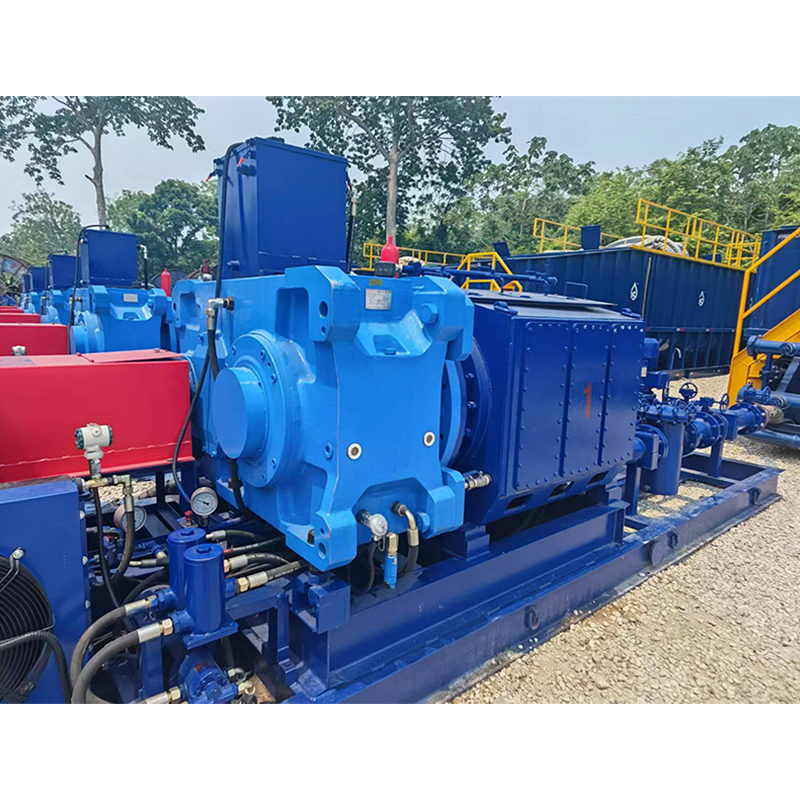
Choosing between a duplex and a triplex architecture fundamentally alters your site capabilities. You must understand how these distinct mechanisms handle fluid dynamically.
The double-acting mechanism moves fluid on both the forward and backward piston strokes. It fills one side of the cylinder while simultaneously discharging the other side. This creates a continuous pumping action from just two pistons.
This design moves higher volumes of fluid at much lower operational speeds. Crews generally find it simpler to operate and troubleshoot in the field. However, it brings notable structural downsides. The units are significantly heavier and bulkier. They generate higher pressure pulsation in the discharge line. Industry experts often consider this older, legacy technology.
The single-acting mechanism uses three distinct pistons. They move fluid on the forward stroke only. The backward stroke simply draws in new fluid for the next push. They provide a steady, relentless, and overlapping push.
You get lighter overall weight and a much smoother discharge profile. Less pulsation directly protects your expensive downstream valves and hoses. It handles higher pressures very efficiently. On the downside, you must perform more frequent valve maintenance. The fluid end design is slightly more complex for beginners to rebuild.
We recommend defaulting to Triplex designs for high-pressure or deep-hole environments. You should carefully consider Duplex pumps for specific high-volume, low-pressure legacy setups. Match the internal architecture to your exact depth and flow requirements.
Evaluation Metric | Duplex Architecture | Triplex Architecture |
|---|---|---|
Action Mechanism | Double-acting (both strokes) | Single-acting (forward only) |
Flow Profile | High volume, lower speed | Smooth discharge, less pulsation |
Physical Footprint | Heavier, bulkier frame | Lighter, more compact build |
Maintenance Demand | Simpler internal access | Requires frequent valve checks |
Primary Application | Legacy low-pressure drilling | High-pressure, deep-hole projects |
Purchasing the right equipment requires a strict evaluation of actual site outcomes. You must look far beyond the basic marketing specifications.
Avoid the common trap of simply buying the highest specification available. You must evaluate Max GPM and PSI strategically. Compare them directly against your specific drilling fluid weight and hole diameter. Heavy mud requires significantly more mechanical force to move. A wider hole needs more volume to lift cuttings properly. Calculate these precise metrics before you make a decision.
Always assess your rig space constraints early in the planning phase. You have limited deck space to work with. Evaluate gear-driven versus chain-driven power ends carefully. Gear-driven ends are generally compact and fully enclosed. Chain-driven ends are easier to repair visually but require more physical space. Make this choice based on strict rig weight limits and required site mobility.
Abrasive drilling mud destroys cheap metals with surprising speed. You must evaluate the steel forging quality of the fluid end blocks. Look for high-grade forged alloy steel from reputable foundries. Investigate the availability of ceramic or bi-metal liners for the cylinders. Ceramic liners cost slightly more upfront but last significantly longer in harsh conditions. They actively resist deep scoring from sharp sand particles.
High-pressure operations pose extreme physical risks to personnel on site. Ensure pulsation dampeners meet strict regional safety standards. Check that pressure relief valves carry proper, up-to-date certifications. You must protect your crew from sudden, catastrophic pressure spikes. System safety always remains the top priority above raw performance.
Keep these common procurement mistakes in mind:
Ignoring the weight capacity of your transport trailers.
Failing to verify local environmental noise regulations for engine-driven units.
Overlooking the lead times for specialized replacement parts.
Mismating the pump's power requirement with the rig's available horsepower.
Even the most expensive equipment requires constant attention and replacement parts. You must prepare for the realities of harsh field operation.
These machines consume internal wear parts at a surprisingly high rate. The highly abrasive nature of drilling mud ruins components quickly. Valves, seats, pistons, and liners take a daily beating. You cannot prevent this mechanical wear entirely. It represents a fundamental reality of the fluid circulation process.
Your daily maintenance routine should include the following checks:
Inspect piston cups closely for tearing or excessive heat cracking.
Check the metal valve seats for deep pitting caused by abrasive sand.
Monitor the liner wash system to ensure proper cooling fluid flow.
Verify that the pulsation dampener holds the correct nitrogen pre-charge.
You must plan aggressively for rapid field repairs. Prioritize "quick-change" fluid end designs when selecting a unit. Rig hands must swap expendables in under an hour to keep the project moving. Extended downtime ruins daily progress goals entirely. Keep vital spare parts stocked on site constantly.
Maintain strict fluid properties using efficient shakers and desanders. Removing sharp sand from the mud extends pump life dramatically. Clean mud directly reduces internal friction on the moving pistons.
Even the absolute best equipment fails prematurely under poor operational conditions. We assume you maintain your drilling fluid properly at all times. If your fluid is heavily overloaded with sand, damage happens immediately. Untreated solid particles act like liquid sandpaper inside the precision cylinders. Good maintenance practices dictate the true lifespan of your machinery.
Selecting a fluid circulation system remains an exercise in strict risk management. It requires precise operational matching to achieve success. The right choice carefully balances flow volume, discharge pressure, and maintenance accessibility. You must weigh these exact factors against your unique geological demands.
Take these actionable next steps to secure your operation. First, audit your current rig power capabilities today. Second, define your average bore depth and hole diameter accurately. Finally, consult directly with a qualified application engineer. Calculate your exact hydraulic requirements thoroughly before shortlisting any specific models. Preparation prevents costly field failures.
A: Base it on the required annular velocity needed to lift cuttings safely to the surface. Your specific hole diameter and drill pipe size dictate this critical metric. Always factor in an additional 20% flow capacity to account for inevitable friction and pressure losses down the hole.
A: Centrifugal pumps handle high-volume, low-pressure fluid transfer tasks, like mixing mud in tanks. Mud pumps act as positive displacement units. Engineers design them specifically for high-pressure injection deep down the drill hole, where pushing past heavy resistance is required.
A: This timeline remains highly variable. It depends entirely on the fluid abrasiveness and your operating pressure. You should expect to inspect these parts daily for scoring. Plan to replace them anywhere from every 100 to 500 operating hours under normal conditions.


