


Views: 0 Author: Site Editor Publish Time: 2026-10-05 Origin: Site


Buying a water well drilling rig is a massive financial choice. Yet, finding transparent pricing online remains incredibly frustrating for many contractors and project managers. In this comprehensive guide, you will learn exact costs and equipment valuations. We also reveal the hidden operational expenses that catch new operators off guard. By understanding these metrics, you can protect your budget and make an informed, data-driven investment.
Broad Price Ranges: Investment levels vary significantly. You might spend a few thousand dollars for basic residential units, or well over $100,000 for industrial-grade hydraulic models.
Primary Cost Factors: The upfront invoice is dictated by your required drilling depth, engine power, automation levels, and the specific mounting chassis.
Hidden Expenses: The core machine is merely the starting point. Buyers must allocate capital for essential supporting equipment like high-pressure air compressors, heavy-duty mud pumps, and specialized drill bits.
Smart Purchasing Strategy: Selecting equipment based strictly on local geological conditions is critical. Matching the asset to the actual terrain prevents overspending and maximizes your return on investment.
Before diving into specific numbers, it is crucial to understand the macroeconomic factors currently driving equipment prices. Based on recent market analysis and field data, the water well drilling sector is experiencing a significant technological shift. Labor shortages across the construction and drilling industries are forcing contractors to rethink their crew sizes. Consequently, there is a massive surge in demand for rigs equipped with automated rod loaders and remote-control tramming systems. While these automated features increase the initial purchase price, they allow a two-man crew to accomplish what previously required four workers.
Furthermore, strict global emissions regulations are reshaping engine configurations. Manufacturers are abandoning older mechanical diesel engines in favor of advanced, emissions-compliant powerplants. These modern engines utilize sophisticated electronic fuel injection and exhaust aftertreatment systems. This transition inherently raises manufacturing costs. However, experienced drillers recognize that the resulting fuel efficiency and extended maintenance intervals quickly offset the higher sticker price during daily operations.
Understanding the financial commitment required for groundwater extraction begins with evaluating the broad spectrum of available machinery. Drilling through soft residential clay requires completely different torque specifications than punching through solid industrial granite. Manufacturers engineer machines with vastly different capabilities to meet these varied demands. As a result, prices span a massive range, typically falling between $3,000 and $150,000.
To make sense of this wide spectrum, we can categorize pricing into three distinct tiers based on mechanical capability and target applications.
Equipment Tier | Typical Price Range | Target Application | Common Geological Conditions |
|---|---|---|---|
Entry-Level / Residential | $3,000 – $15,000 | Shallow domestic wells, agricultural irrigation, off-grid projects. | Soft soils, clay, sand, and loose gravel. |
Mid-Range / Commercial | $15,000 – $60,000 | Standard commercial drilling, rural water supply, moderate depths. | Mixed soils, soft rock, limestone, and compacted earth. |
Industrial / Heavy-Duty | $60,000 – $150,000+ | Deep municipal wells, geothermal drilling, hard rock penetration. | Granite, basalt, dense rock formations, and complex stratigraphy. |
The entry-level tier provides basic mechanical function without complex fluid power systems. These units are highly portable but lack the rotational torque required for challenging geology. Moving up, the mid-range tier represents the standard for independent drilling contractors. This tier offers an optimal balance of hydraulic power and site mobility. Finally, the industrial tier involves severe-duty structural components, advanced automation, and massive lifting capacities engineered for continuous operations.
To accurately estimate your budget, you must evaluate the specific architectural design your project requires. The mounting style and power delivery system directly dictate both the manufacturing cost and your daily operational efficiency.
When a job site restricts access to a narrow residential gate or a densely wooded lot, massive truck-mounted rigs simply cannot enter. In these scenarios, investing in a small water well drilling rig becomes essential. Typically priced between $3,000 and $10,000, these units are highly favored by agricultural workers and startup contractors operating in regions with high water tables. The lower cost is achieved through lighter steel frames and simplified manual controls. Buyers must recognize that these setups have strict depth limitations and struggle against hard rock layers.
For operators seeking rugged durability without the premium price tag of complex hydraulic networks, a mechanical well drilling machine offers a highly practical solution. These robust units generally range from $10,000 to $25,000.
Mechanical designs rely on traditional gearboxes, heavy-duty clutches, and physical drive shafts to transfer power from the engine to the drill string. This direct-drive approach is historically proven and incredibly reliable. If a component fails in a remote field, local mechanics can often repair it without requiring specialized electronic diagnostic tools. They remain an excellent, cost-effective choice for standard mud-rotary applications.
Transportation logistics play a massive role in day-to-day profitability. By opting for a skid mounted borehole drilling machine, contractors can drastically cut their initial capital expenditure. These units typically cost between $15,000 and $40,000.
The primary financial advantage here is the omission of a dedicated commercial vehicle chassis. You only pay for the essential drilling components like the mast, engine, and power head. Operators can utilize a transport flatbed trailer they already own to move the equipment, bypassing the need for expensive commercial truck insurance and specialized licensing.
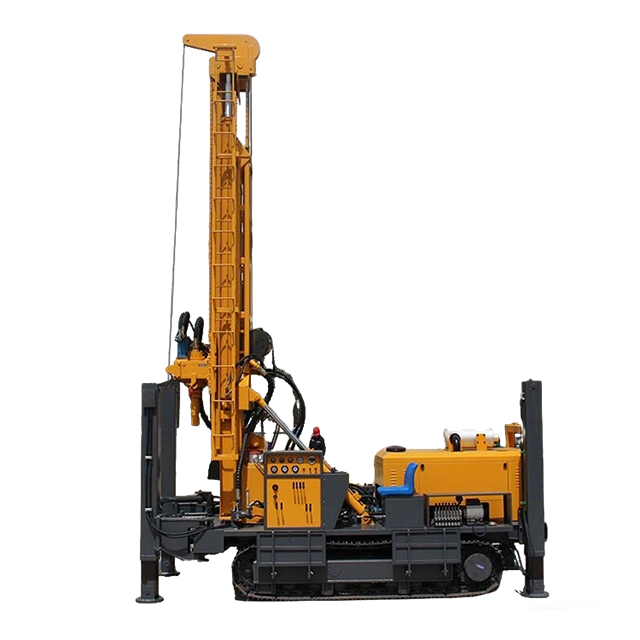
When projects demand deep penetration through unyielding rock formations, contractors must step up their investment. Premium machines designed for these environments command prices ranging from $50,000 to well over $150,000. For instance, a heavy duty crawler hydraulic water rig justifies its steep cost through advanced engineering.
Steel crawler tracks allow the machinery to navigate steep gradients, deep mud, and rugged terrain independently. Fully hydraulic systems provide the immense rotational torque and pullback force essential for operating Down-The-Hole hammers in solid granite. The heavy-gauge steel construction withstands extreme high-frequency vibrations, ensuring asset longevity for professional enterprises.
Understanding why two seemingly similar machines carry a $30,000 price difference requires looking beneath the fresh paint. Five primary technical factors dictate the actual manufacturing cost.
The deeper and wider the hole, the more robust the equipment must be. Reaching 300 meters requires significantly more pullback force to lift a heavy string of steel rods out of the earth compared to a shallow 100-meter well. To achieve this safely, manufacturers must install taller masts, thicker structural steel, larger hydraulic cylinders, and higher-capacity winches. Every incremental increase in depth capacity exponentially raises the material costs.
The engine acts as the beating heart of the entire operation. Units equipped with standard, unbranded diesel engines will be notably cheaper. In contrast, setups featuring globally recognized engine brands command a premium. These top-tier engines offer superior torque curves, stricter emissions compliance, and global warranty support. High-horsepower engines required to drive massive tandem hydraulic pumps naturally inflate the baseline price.
The method of power transmission drastically affects the invoice. Fully hydraulic rigs utilize complex networks of pumps, proportional valves, and drive motors to control every aspect of the process smoothly. This fluid power reduces manual labor and provides precise control over bit weight. However, these precision components are expensive to manufacture. Mechanical systems use physical gears and chains, which are cheaper to produce but demand more physical effort from the operator.
Modern equipment can be outfitted with technology designed to slash labor costs and improve safety metrics. Features such as automatic rod loaders prevent operators from manually lifting heavy steel pipes all day. Remote control driving modules and digital diagnostic displays add significant upfront costs. While pricey, these features often pay for themselves over time by minimizing workplace injury claims and reducing crew fatigue.
Not all steel is created equal. Machinery built with high-yield structural steel will cost more than those welded from standard mild alloys. High-quality paint systems, like marine-grade epoxy, prevent rust and extend the asset lifespan. Premium high-pressure hoses and heavy-duty rotary head bearings prevent catastrophic blowouts in the field. Paying for superior build quality upfront serves as a vital insurance policy against expensive downtime.
A common and often fatal error among new buyers is allocating their entire budget to the central machine itself. Imagine arriving at a remote residential site only to realize your mud pump lacks the volume to flush out an unexpected layer of heavy gravel. Suddenly, drilling stops. To accurately calculate your Total Cost of Ownership, you must budget for the supporting equipment, consumables, and logistics required to actually put a hole in the ground.
Expense Category | Description of Items | Estimated Budget Impact |
|---|---|---|
Supporting Equipment | Mud pumps for rotary drilling or Air Compressors for rock drilling. | Moderate to Extremely High. Compressors can cost as much as the rig itself. |
Drill String and Tooling | Drill rods, heavy-weight drill collars, and stabilizers. | Moderate. Depends entirely on target depth and is priced per meter. |
Consumables | Tricone bits, PDC bits, hammers, drilling mud polymers, and diesel fuel. | Ongoing recurring expense. |
Maintenance Parts | Hydraulic oil, engine oil, filtration systems, and mast wear pads. | Ongoing recurring expense. |
Logistics and Licensing | Transport trailers, driver wages, commercial insurance, and state permits. | Variable based on local regulations. |
If you are working through soil and clay, you need a reliable mud pump to circulate drilling fluid, cool the bit, and carry cuttings to the surface. While basic mud pumps are relatively affordable, rock drilling demands a completely different ecosystem. Operating a pneumatic hammer requires a high-pressure, high-volume air compressor. A towable compressor capable of delivering 900 cubic feet per minute at 350 PSI can easily cost between $40,000 and $80,000, effectively doubling your initial capital output.
Drill bits are wear items that must be replaced regularly to maintain penetration rates. A standard drag bit for soft soil may cost a few hundred dollars. By contrast, high-performance Polycrystalline Diamond Compact bits or specialized tungsten carbide tricone bits can run several thousand dollars each. Additionally, you must factor in the ongoing cost of bentonite clay, foaming agents, and the daily consumption of diesel fuel for both the main engine and the supporting compressor.
When evaluating costs, buyers inevitably face the decision of whether to purchase brand-new equipment or source a used machine from the secondary market. Making the right choice requires an objective analysis of your business model, mechanical expertise, and risk tolerance.
The most obvious advantage of buying used is the reduced initial investment. A used machine can often be acquired for half the cost of a new model, freeing up vital cash flow for supporting gear like air compressors. Furthermore, the previous owner has already absorbed the steepest asset depreciation.
However, ground penetration puts immense stress on metal structures. A used asset may harbor hidden mechanical fatigue, such as micro-fractures in the mast, scored cylinder walls, or degraded rotary head seals that are invisible during a standard visual inspection. Used inventory is almost universally sold as-is. If the main tandem pump fails during your first week on site, the replacement cost and the resulting project downtime fall entirely on your shoulders.
New machines arrive with factory warranties and untouched components. This predictability allows contractors to forecast their operational budgets accurately without fearing sudden, catastrophic repair bills. Modern engineering also focuses on drilling faster while consuming less fuel. This improved efficiency directly reduces your cost per foot drilled, widening your overall profit margins over the lifespan of the equipment.
Selecting the appropriate machinery is a highly technical decision driven by environmental data, not just budget constraints. Over-specifying will drain your capital, while under-specifying will result in damaged tools and failed projects. Follow this systematic framework to align your purchase with your operational reality.
First, assess your local geology. The geological composition of your primary working territory is the single most important factor. If you operate in areas dominated by loose soil, sand, or clay, high rotational torque is more critical than heavy downward pressure. Conversely, if your region consists of granite or heavily fractured rock, you will absolutely require a heavy-duty hydraulic setup paired with an air compressor.
Second, determine your target depth and diameter. Never purchase machinery based solely on its absolute maximum theoretical depth. Calculate the total weight of the drill string required for your average target depth. Ensure the unit you choose has a pullback capacity that exceeds this total weight by at least thirty percent to prevent the mast from operating at its absolute breaking point.
Finally, calculate your return on investment. Estimate the total cost of the machinery plus shipping and essential accessories. Next, calculate your average net profit per well. Divide the total equipment cost by your net profit per well to determine exactly how many jobs you must complete to break even. A healthy business model should aim to pay off the core machinery within 12 to 24 months of steady operation.
In the heavy machinery industry, the initial invoice is only a fraction of the financial equation. The reliability of your supply chain directly impacts your bottom line. The market is currently saturated with extremely cheap, unbranded rigs that promise industrial performance. However, these machines frequently utilize substandard steel, low-grade seals, and unverified engine components. When these parts inevitably fail under the brutal stress of drilling, owners discover there is no customer support and no schematic diagrams available to facilitate repairs.
Partnering with a reputable, established manufacturer transforms your equipment purchase from a risky transaction into a strategic business asset. Buying directly from the factory eliminates middleman markups, ensuring you receive industrial-grade equipment at a fair market value. Legitimate manufacturers stand behind their engineering with clear warranties, maintain a comprehensive inventory of standardized spare parts, and provide the technical consultation necessary to empower your crew.
The true cost of a water well drilling rig depends heavily on its specific architecture, depth capabilities, and the geological environment it must conquer. Beyond the initial sticker price, your required supporting equipment and daily consumables drastically change the total financial picture. Remember that the absolute cheapest option is rarely the most profitable choice in the long run. Durability, parts availability, and operational efficiency matter most for the survival of your business.
If you are ready to scale your drilling operations with equipment built for severe environments, we encourage you to explore the proven technical solutions available at BeyondRig. By carefully assessing your local terrain and partnering with our engineering team, you can find the exact machinery tailored to your geological requirements and secure an asset that delivers consistent, reliable revenue for years to come.
With strict adherence to routine maintenance, such as regular greasing, timely hydraulic fluid changes, and proper storage, a high-quality machine can reliably operate for 10 to 20 years. The lifespan of specific wear parts, like mud pump valves and rotary seals, will naturally depend on your drilling frequency and the abrasiveness of the local geology.
Yes. Most commercial businesses do not purchase heavy equipment entirely with upfront cash. General equipment financing options, commercial industrial loans, and capital leasing programs are widely available through specialized lenders. This allows contractors to spread the massive capital cost over several years while the machine actively generates daily revenue.
For hard rock penetration, Down-The-Hole hammer rigs are the undisputed industry standard. While they require a significantly higher initial investment, largely due to the necessity of towing a high-pressure air compressor, their ability to pulverize solid granite rapidly makes them far more cost-effective per foot drilled than attempting to use standard mud rotary methods.
Regulations vary significantly by jurisdiction. In many regions, you must hold a specific commercial drilling license or a state-issued water well contractor certification to drill legally and tap into groundwater aquifers. Additionally, if your rig is mounted on a heavy commercial truck chassis, the driver will likely require a Commercial Driver's License. Always consult your local environmental and transportation authorities before mobilizing to a job site.
From a contractor's perspective, the cost to drill a 300-foot well varies wildly based on ground conditions. In soft soil using mud rotary techniques, operational costs might run between $15 and $30 per foot. However, drilling through solid granite using pneumatic hammers and high-pressure compressors can push operational costs to $40 or $60 per foot due to increased fuel consumption and expensive bit wear.
Annual maintenance costs generally average between 3% and 5% of the machine's initial purchase price. This budget should cover routine hydraulic oil replacements, engine servicing, filter swaps, and the replacement of minor wear items like mast slide pads and rotary head seals. Heavy usage in highly abrasive environments will naturally push this percentage higher.


