


Views: 0 Author: Site Editor Publish Time: 2026-08-18 Origin: Site


In mineral exploration and geotechnical site investigations, poor sample recovery, unexpected mechanical downtime, and lack of real-time drilling data rapidly eclipse the initial capital expenditure of drilling equipment. Procurement teams and operations managers face a saturated market. It is difficult to distinguish between superficial upgrades and features that genuinely impact penetration rates, core integrity, operator safety, and lifecycle governance in challenging geologies. Moving beyond basic depth capacities and engine horsepower, this guide breaks down the five critical features required in a modern core drilling rig. We will examine essential digital telemetry and aftermarket support criteria to ensure operational viability, regulatory compliance, and maximum return on investment.
Hydraulic Efficiency Dictates Uptime: A Premium Hydraulic Core Drilling Rig with load-sensing capabilities and power-saving modes significantly reduces heat generation and fuel consumption during continuous coring operations.
Torque-to-RPM Ratios Determine Versatility: The ability to seamlessly shift between high torque (for overburden) and high RPM (for hard rock), backed by real-time digital monitoring, is non-negotiable for maintaining core quality.
Safety Automation is a Financial Imperative: Automated rod handling systems and ergonomic controls are no longer luxury add-ons; they are essential for mitigating liability, developing crew capabilities, and maintaining consistent cycle times.
Mast Rigidity Impacts Deep-Hole Accuracy: Pull-back capacity must be matched with structural mast rigidity to prevent deflection, ensure accurate Measurement While Drilling (MWD) data indexing, and prevent equipment loss at maximum depth.
Lifecycle Governance Relies on OEM Proximity: A rig's value is heavily dependent on the distance to local service centers, parts availability, and structured maintenance protocols.
Continuous coring generates immense heat and requires precise pressure control. Inefficient hydraulics lead to overheating, accelerated component wear, and inconsistent bit pressure. This directly degrades sample quality and inflates fuel costs. When a rig operates at maximum depth, the hydraulic system must simultaneously manage the rotary head, the feed cylinder, and the wireline winch. Older systems utilizing fixed-displacement gear pumps push a constant flow of hydraulic fluid regardless of the actual demand. This excess flow is forced over relief valves, transforming wasted energy directly into system heat. Over time, this thermal stress degrades hydraulic seals, reduces fluid viscosity, and leads to catastrophic pump failure during critical drilling phases.
Modern engineering solves this through variable-displacement load-sensing piston pumps integrated with power-saving eco-modes. These advanced systems monitor the exact pressure and flow requirements of each active circuit. By adjusting the swashplate angle within the pump, the system delivers only the required fluid volume. You must evaluate how a Premium Hydraulic Core Drilling Rig allocates power dynamically between its primary functions to optimize fuel consumption. When the driller reduces feed pressure to navigate a fractured zone, the load-sensing system instantly dials back pump output. This conserves engine horsepower and drastically reduces diesel consumption over a standard twelve-hour shift.
Cooling system capacity must be assessed relative to the ambient temperatures of intended operational environments. A rig deployed in arid, high-temperature regions requires oversized heat exchangers and thermostatically controlled cooling fans that activate only when fluid temperatures cross specific thresholds. Furthermore, review the system's power-saving controls during non-drilling phases. Rod tripping or standby periods account for a significant portion of a shift. Intelligent hydraulic systems automatically drop engine RPM and reduce pump displacement during these idle times, lowering overall emissions and extending the maintenance intervals for the diesel power plant.
Highly complex hydraulic systems require specialized maintenance. Mechanics need centralized diagnostic blocks where they can quickly attach pressure gauges without dismantling major rig components. Clear diagnostic interfaces, coupled with the availability of OEM diagnostic support in remote locations, ensure that field technicians can troubleshoot proportional valve failures or pump cavitation issues before they result in extended downtime.
To maintain peak hydraulic efficiency in the field, crews should follow these standardized maintenance steps:
Conduct daily visual inspections of all high-pressure hoses for abrasion or weeping fittings.
Sample hydraulic fluid every 500 hours to test for particulate contamination and water ingress.
Calibrate the load-sensing compensator valve quarterly to ensure the pump destrikes correctly under zero-load conditions.
Clean the hydraulic heat exchanger fins weekly with compressed air to maintain maximum thermal transfer.
Geological variability demands a rotary head capable of adapting instantly. A rig optimized only for soft formations will fail or burn out bits when encountering igneous intrusions, especially if operators lack real-time feedback. The transition from weathered saprolite to competent granite requires an immediate adjustment in both rotational speed and weight on bit. Without a versatile rotary head, drillers are forced to compromise, leading to core blockages, polished diamond bits, or excessive deviation from the target trajectory.
The primary solution categories involve choosing between direct-drive and multi-gear transmission rotary heads, paired with digital torque and RPM monitoring. Direct-drive hydraulic motors offer simplicity and fewer moving parts, making them highly reliable for shallow to medium-depth programs. However, multi-gear transmissions provide a distinct mechanical advantage. By physically shifting gears, the rig multiplies torque for casing advancement through challenging overburden, while preserving the ability to achieve the high RPMs necessary for efficient diamond coring at depth.
You must analyze the chuck design for grip reliability on various rod sizes, typically ranging from BQ to PQ. Hydraulic open/spring close chucks provide fail-safe operation. If hydraulic pressure is lost, the springs maintain a secure grip on the drill string, preventing it from dropping down the hole. For a hard rock core drilling rig, evaluate the maximum RPM capacity. Hard rock coring often requires speeds exceeding 1,000 RPM to allow the diamond matrix to cut efficiently. This high-speed capability must be balanced with low-speed/high-torque settings required for augering or casing through loose, unconsolidated surface gravels.
Determine if the rig features digital telemetry that logs torque and RPM data. Analog gauges vibrate and are difficult to read accurately. Digital telemetry provides supervisors with precise, real-time data streams. By monitoring torque spikes, drillers can anticipate formation changes or identify a failing bit before it destroys the core sample. This data logging capability allows operations managers to govern drilling parameters remotely, ensuring crews adhere to best practices and preventing premature bit wear.
Rotary Head Configuration Comparison
Feature | Direct-Drive Rotary Head | Multi-Gear Transmission Head |
|---|---|---|
Mechanical Complexity | Low (Fewer moving parts, easier field repair) | High (Requires gear oil maintenance, complex rebuilds) |
Torque Output | Moderate (Limited by hydraulic motor displacement) | Very High (Mechanical multiplication in low gear) |
RPM Range | Narrow (Optimized for specific rod sizes) | Wide (Can shift from 100 RPM to 1,200+ RPM) |
Best Application | Homogeneous rock, shallow to medium depth coring | Highly variable geology, deep holes requiring heavy casing |
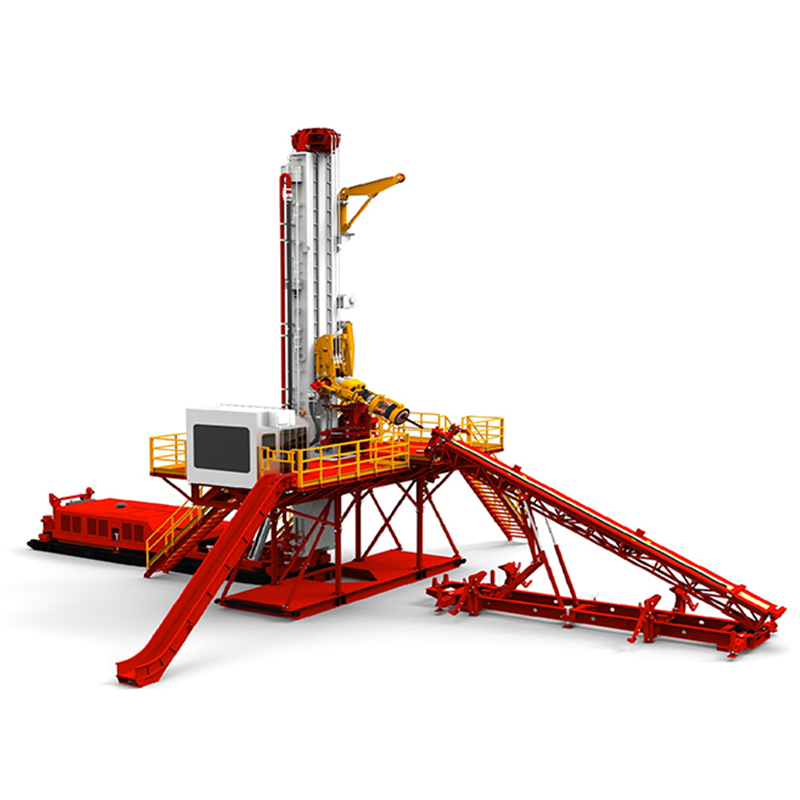
Manual rod tripping is the primary source of catastrophic injuries and repetitive strain on drill sites. The physical demand of lifting, threading, and lowering thousands of meters of steel pipe day after day takes a severe toll on the human body. A standard 3-meter HQ drill rod weighs approximately 25 kilograms. Tripping out of a 1,000-meter hole requires the crew to manually lift and maneuver over 8 tons of steel in a single shift. Furthermore, manual tripping limits the depth capacity per shift due to operator fatigue and hinders the onboarding of newer, less experienced crews who lack the physical conditioning of veteran drillers. Removing the physical barrier to entry is essential for crew development.
Rig manufacturers address this through semi-automated rod spinners and make-up clamps, or fully autonomous rod feeding systems equipped with ergonomic control stations. Semi-automated systems assist the driller by handling the high-torque breaking of rod joints. Fully autonomous systems mechanically lift the rod from a horizontal bin, align it with the mast, and thread it into the string without human hands ever touching the steel. Assess the integration of safety interlocks within these systems. Modern control architectures utilize Programmable Logic Controllers (PLCs) to ensure that rotary engagement is physically impossible while the rod handler is in motion, eliminating the risk of entanglement.
Evaluate the cycle time of the rod handler. A system that is too slow will face resistance from field crews who are often incentivized by meterage bonuses. If the automated handler significantly delays the tripping process, operators may attempt to bypass safety protocols to speed up the work. The automation must be fluid, precise, and capable of matching or exceeding the pace of a well-rested manual crew. Examine the control panel ergonomics. Modern rigs should facilitate leadership and crew development by providing intuitive, joystick-based controls. Electronic over hydraulic controls reduce operator fatigue by requiring only minimal hand movements, replacing the heavy physical levers of older rigs.
Automated systems add weight to the rig and require rigorous calibration. Proximity sensors, laser alignments, and hydraulic limit switches must function perfectly in environments filled with mud, grease, and vibration. Field crews must receive mandatory, hands-on OEM training. This training must focus specifically on troubleshooting sensor faults, overriding automated sequences safely during a malfunction, and mastering the automated workflows to maintain high production rates.
As hole depth increases, the weight of the drill string tests the structural limits of the rig. Mast deflection causes premature wear on the rotation unit, increases the risk of in-hole rod failure, and corrupts downhole survey data. When a mast bends under heavy pull-back loads, the rotary head falls out of alignment with the borehole. This misalignment forces the drill rods to rub aggressively against the casing or the rock wall, causing severe vibration, accelerating thread wear, and ultimately leading to a snapped string deep underground.
The structural integrity of the mast dictates the true depth capability of the equipment. Solution categories range from telescopic masts designed for compact transport to fixed lattice or heavy-duty box-section masts built for ultra-deep exploration. Examine the true pull-back and pull-down capacities, ensuring they align with the target depths for a rock core drilling rig using standard wireline systems. Pull-back capacity must account for the static weight of the rods plus the dynamic friction encountered when pulling through swelling clays or collapsing formations. A 1,000-meter NQ string weighs roughly 7.8 tons in air, but hole friction can easily double the required pull-back force during retrieval.
Evaluate the synchronization between the main hoist, wireline winch, and the feed cylinder. Smooth core retrieval relies on precise control. When the inner tube is pulled from the core barrel, sudden jerks or drops can fracture the rock sample, reducing the Rock Quality Designation (RQD) score. Synchronized hydraulic valving ensures that the wireline winch pulls the inner tube smoothly, preserving the geological integrity of the sample. The feed cylinder must also provide micro-feed capabilities, allowing the driller to maintain a constant, delicate weight on the bit when drilling through soft, friable mineral zones.
Assess the mast's stability for Measurement While Drilling (MWD) applications. Modern exploration relies heavily on downhole sensors that map the trajectory of the borehole and record geophysical data in real-time. A rigid mast ensures that downhole indexing and spatial data logging remain highly accurate. Any flex in the mast at the surface translates to angular errors in the survey data, which is critical for enterprise-scale geological modeling. Telescopic masts offer a smaller transport footprint and faster setup times, but they sacrifice the ultimate rigidity found in heavier, fixed-mast designs required for deep, directional drilling programs.
The best drilling components are useless if the rig cannot access the site, violates environmental ground-pressure regulations, or is deployed too far from logistical support networks. Exploration targets are increasingly located in remote, environmentally sensitive, or topographically challenging areas. The mobility configuration of the rig directly dictates the feasibility of the entire drilling program. Solution categories include crawler/track-mounted, truck-mounted, skid-mounted, and heli-portable configurations, each serving a distinct logistical purpose.
Calculate the ground bearing pressure (PSI/kPa) for track-mounted units. Operating in bogs, tundra, or protected wetlands requires wide, low-ground-pressure tracks that distribute the machine's weight, preventing deep rutting and environmental degradation. Evaluate tramming speeds and gradeability. A rig must navigate steep inclines safely. Look for independent leveling jacks with long strokes, allowing for rapid and secure setup on uneven terrain without the need for extensive earthmoving and site preparation.
Heli-portable rigs are engineered to be broken down into modular components, each weighing less than the maximum lift capacity of standard support helicopters (typically around 600 to 800 kilograms per lift). While this provides ultimate access to mountainous or jungle terrains, it introduces complexities in assembly and maintenance. Truck-mounted rigs offer rapid mobilization between sites connected by road networks, making them ideal for shallow geotechnical work or regional exploration programs.
Factor in the physical distance to OEM service centers. A highly mobile rig still requires a reliable supply chain for consumables, drilling mud, and replacement parts based on its deployed location. Highly mobile rigs often compromise on onboard fluid capacity to save weight. Mitigate this by factoring in the logistics of auxiliary mud pumps, water transport vehicles, and portable mud recycling systems during the procurement phase. A lightweight rig will halt production immediately if it runs out of circulating fluid.
Mobility Configuration Matrix
Mobility Type | Primary Advantage | Logistical Limitation | Ideal Terrain |
|---|---|---|---|
Crawler / Track-Mounted | Low ground pressure, excellent gradeability | Slow tramming speed, requires a lowboy trailer for long distances | Mud, snow, uneven forested terrain |
Truck-Mounted | Rapid highway mobilization between sites | High ground pressure, requires established access roads | Urban geotechnical sites, regional highway-adjacent exploration |
Heli-Portable | Access to completely landlocked or mountainous areas | Complex assembly, strict weight limits on auxiliary equipment | Remote jungles, high-altitude alpine regions |
Skid-Mounted | Extremely durable, simple construction | Requires a bulldozer or heavy tractor to drag between pads | Established mine sites with heavy equipment support |
Evaluating the physical features of a core drilling rig is only half the procurement process. Enterprise-scale drilling operations require a strict governance framework for maintenance, parts availability, and lifecycle management. The most technologically advanced rig becomes a liability if it sits idle waiting for proprietary sensors to be shipped across the globe. Establishing a robust aftermarket support strategy ensures that the equipment maintains high availability throughout its operational life.
Assess the proximity of the manufacturer’s service hubs to your primary drilling locations. Local relevance and distance dictate your Mean Time To Repair (MTTR). A superior rig loses its value if replacement parts take weeks to clear customs or if specialized technicians must be flown in internationally for basic troubleshooting. Require manufacturers to provide detailed Service Level Agreements (SLAs) guaranteeing parts availability and response times within your specific operating regions.
Ensure the rig's digital systems allow for easy exporting of drilling logs and maintenance alerts. Data governance is critical for modern fleet management. The rig should export telemetry in standardized formats to your existing fleet management software. This allows maintenance planners to schedule preventative interventions based on actual component wear rather than arbitrary calendar dates. Opt for rigs that utilize standardized, non-proprietary hydraulic and electrical components where possible. Utilizing standard industry valves, hoses, and relays empowers local mechanics to perform emergency repairs without waiting for OEM-specific parts, drastically reducing unexpected downtime.
Compile site-specific geological data, maximum depth requirements, and environmental access constraints to define your baseline equipment needs.
Request empirical case studies and telemetry logs from rig manufacturers demonstrating their equipment operating in conditions identical to your target sites.
Audit the local supply chain to verify the physical location of the nearest OEM parts depot and certified service technicians.
Mandate hands-on, site-specific training programs from the manufacturer to ensure your crews can effectively operate and troubleshoot advanced automated systems.
A: Premium models utilize load-sensing, variable-displacement pumps that adjust fluid flow based on immediate demand. This reduces system heat, saves diesel fuel, and provides smoother, more precise control compared to older fixed-displacement systems. They also frequently feature digital telemetry for advanced operational governance and fault diagnostics.
A: Pull-back capacity depends entirely on the target depth and the size of the drill rods being used. A rig must possess enough pull-back to lift the entire static weight of the drill string, plus a 20-30% safety margin to overcome dynamic in-hole friction and prevent getting stuck.
A: Mast rigidity prevents structural deflection under heavy pull-back loads. If the mast bends, the rotary head misaligns with the borehole, causing severe vibration, accelerating rod thread wear, and corrupting the spatial accuracy of downhole Measurement While Drilling (MWD) sensors.
A: Automated rod handlers remove operators from the direct line of fire. By mechanically lifting, aligning, and threading heavy drill rods, these systems eliminate the repetitive strain injuries, pinched fingers, and catastrophic crushing hazards associated with manual rod tripping.
A: Heli-portable rigs are best for extreme terrain without road access, as they break down into modular, flyable components. For rugged terrain that can support ground transport, low-ground-pressure crawler tracks provide excellent traction and gradeability while minimizing environmental impact.
A: Load-sensing systems only pump the exact volume of hydraulic fluid required for the current task. Because they do not push excess fluid over relief valves—which generates massive friction—the system runs significantly cooler, preserving seal integrity and fluid viscosity.


